Project Horizon
Overview
Status:
Unreleased
Roles:
Director
Lead Designer
Producer
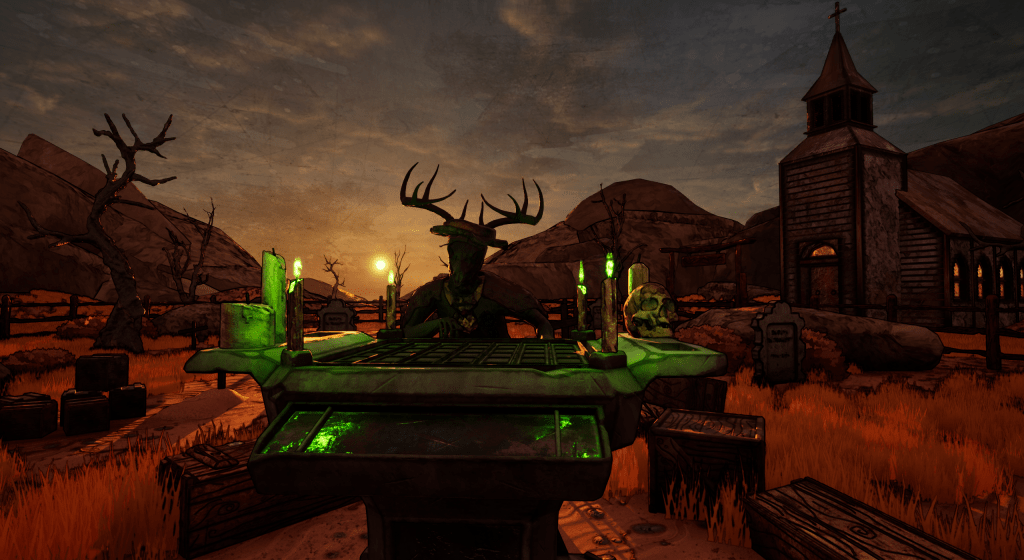
Project Horizon is a card-battle, deck-builder set in a wild west ghost town beset by animal-headed demons. It features a card battle game where each card type has a movement archetype that dictates how it can traverse the board. Some cards can only travel diagonally, while others travel along the ranks and files of the board. These movement archetypes, reminiscent of the piece movement in chess, create a very dynamic and tactical card battle experience. I lead a team in crafting a prototype to explore Project Horizon‘s core card game systems and visual style.
Credits: Robert Reckowsky, Jack Holt, Bryce Hui, Trudy Townsend, Ava Bickner
Gameplay Design
The central focus of the Project Horizon prototype is the card combat system and, more specifically, the movement and damage mechanics. I started by creating an extensive game design document that outlined the style and mechanics. I also wrote a document specifically for use in making the prototype. This document broke down the core systems that needed to be implemented for a functional prototype. Once the documentation was complete, I worked with a 3D artist, programmer, and composer to bring the prototype to life.
Card Combat Design:
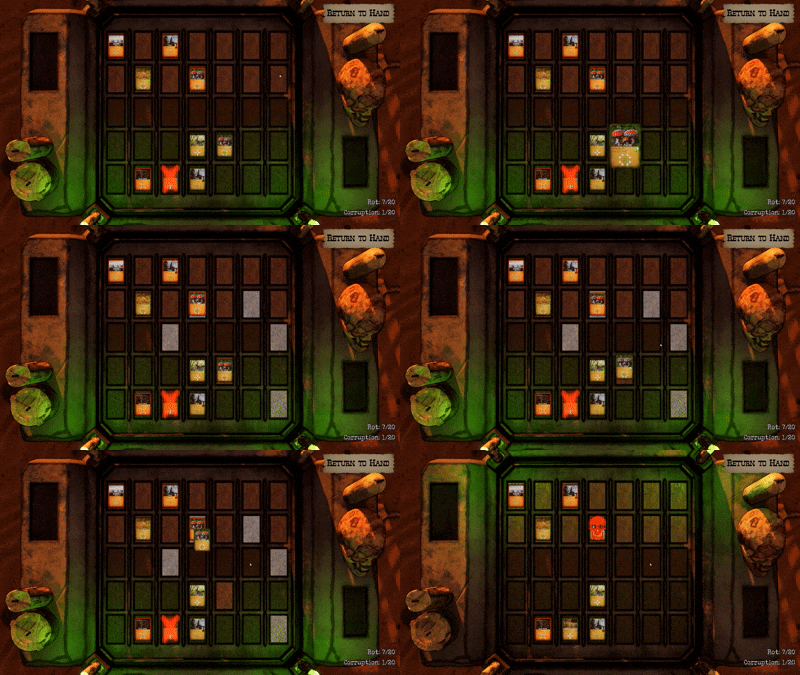
Project Horizon‘s card battle gameplay takes place on a board with seven columns and five rows, 35 total spaces. The game is between the player and one opponent. The game starts with the player and their opponent placing their home cards on the board. After this setup, the player and the opponent take turns playing a card from their hand on their side of the board, then moving one of their cards to a new tile. If this new tile is occupied, the attacking card deals damage to the existing card. If the attacking deals enough damage, it destroys the existing card and takes its place. The goal of the game is to deal enough damage to your opponent’s home card to destroy it.
Card Combat Details
- I began the design process for Project Horizon‘s card combat by drawing a grid on a large piece of paper. I then used playing cards to simulate card battles.
- I drew inspiration from classical chess and came up with the idea of cards having movement archetypes that were unique to that class of card.
- Much like chess, some cards jump like knights, some could travel the length of the board like rooks, some moved diagonally like bishops, and others could move only to adjacent spaces like kings.
- For the actual combat of the game, I decided on a simple stats checking system. Cards would have a health and an attacking stat.
- When the player moved one of their cards into a space occupied by an enemy card, the enemy card would subtract the player card’s attack stat from its health stat.
- If the enemy card’s health reduces to zero or less, the player card would destroy the enemy card and take its place, much like capturing a piece in chess.
- The addition of movement archetypes added a whole new dimension of strategy to games. A card with low numeric stats but high mobility could outplay a numerically better card with low mobility in certain situations.
World Design
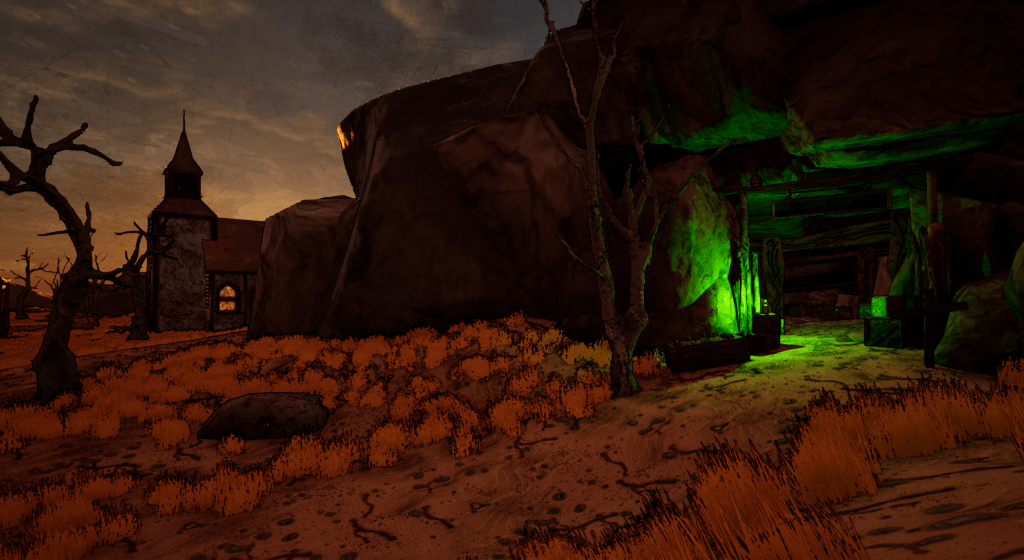
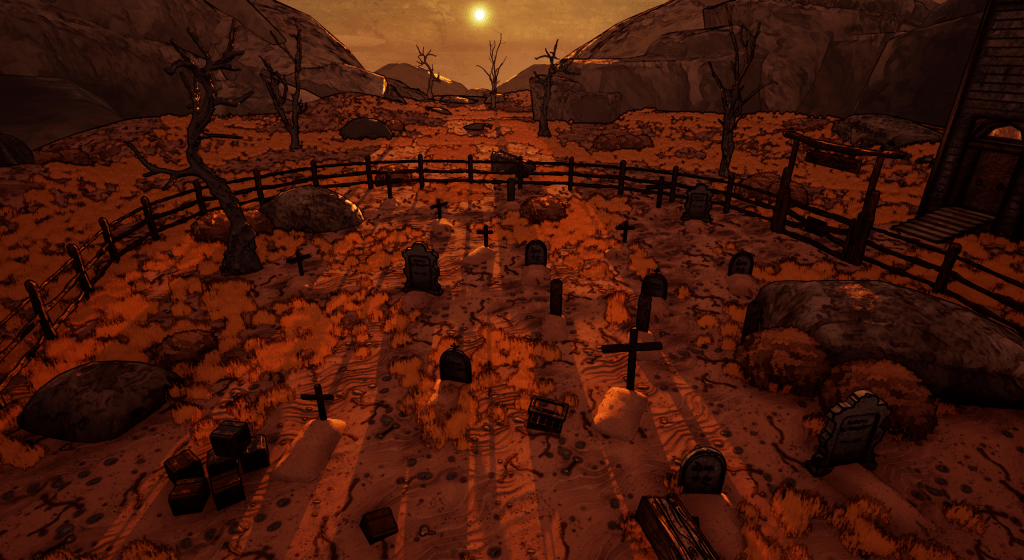
The world of Project Horizon is inspired by the mythos, romance, and tragedy of the American West in the mid-19th century. The country was changing and expanding into an environment rife with conflict. I chose to focus on the clashes between nature and industry that were occurring during this time period. Project Horizon takes place in an abandoned coal mining town. A place of industry, slowly being reclaimed by the surrounding desert.
Visual Design
For the visual style of Project Horizon, I was inspired by the hand-drawn, Sobel-style found in games such as Borderlands, The Walking Dead, and Where the Water Tastes Like Wine. A style that uses a strong black line to indicate form and texture. A scouting trip I took to Utah influenced and inspired the scene I built for the gameplay prototype. During the scouting trip, I compiled photos of the landscape, structures, and history of Carbon County, Utah, to use as reference when building out Project Horizon‘s prototype. I chose to exaggerate the warmth of the color and the depth of the shadow to draw the player’s attention to the unnatural green candlelight on the board.
Visual Design Details
- I collaborated with an artist, Robert Reckowsky, to develop a material workflow that began with a clean base color.
- Various colored grunge and noise maps were added to imply weathering and damage to the material.
- These base materials were applied to their corresponding meshes.
- Black detail lines were drawn on the edges and the interiors of objects to provide texture and form.
- I compiled the assets Robert made in Unreal Engine and added a Sobel, cel-shading post-processing effect to push the hand-drawn effect.
- For the lighting, I decided on a warmly lit environment with deep and long, late afternoon shadows to add an air of unease to the scene.
- For the board itself, I decided to add contrast and even more eeriness to the scene by lighting it with green candlelight.
- I found that both drew attention to the board, while also giving your deer-skulled opponent an unnatural, unsettling air.

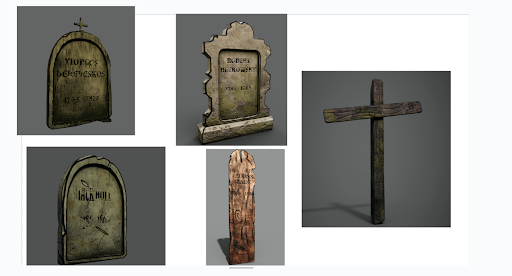

 Yiorgos Bereveskos