Production
Talon’s Blade
Status:
Released – Q2 2025
Platform – Steam
Talon’s Blade is a third-person action-adventure game set in a medieval dark fantasy world stricken by war and betrayal. It features a unique direction-based combat system that uses player inputs to determine the direction of the character’s attacks, blocks, and parries. It is a single-player, narrative-driven experience that follows the last surviving member of a league of Imperial assassins, called the Talons, on his quest for vengeance. Someone close to the Emperor has betrayed the Talons, resulting in their near total annihilation.
Preproduction for Talon’s Blade began during the spring of 2021. I worked as the lead designer and director of Talon’s Blade through its release in May of 2025.
Credits: Robert Reckowsky, Jack Holt, Bryce Hui, Trudy Townsend, Christian Standiford, Hannah Garcia
Team Management
I started work on Talon’s Blade with a team of six others, each with their area of expertise. We were college students at the time, and it was a wonderful challenge to communicate my vision across a team of diverse creatives. One day, I was having a technical programming discussion about the inventory system with my programmers, and the next, I was creating documentation to give to our composer so she could create a leitmotif for our characters. Open communication was very important to ensure things got done well and on time. If I didn’t understand the intricacy of something someone was doing, I’d have them explain it to me so that I could always be sure we were on the same page.

Budgeting
I was given a small budget to work on Talon’s Blade and while I worked on it without personal compensation, I was able to secure the necessary assets and tools to ensure Talon’s Blade would make it to release at the highest quality I could. The majority of the work for Talon’s Blade that I did not do was done on a contract bases.
Communication
For a first full production project, the necessary documentation was lacking. I created many documents to communicate the vision of Talon’s Blade to both myself and my team members, but many of those documents lacked the detail they needed to truly be effective. Good written and verbal communication is critical to a project’s success and the efficient execution of a vision. Many of the problems and trials I faced during the development of Talon’s Blade, such as over-scoping and multiple system rewrites, can be traced back to lackluster documentation. Lessons I have very much taken to heart for all future projects that I am a part of.

Project Horizon
Status:
Unreleased
Project Horizon is a card-battle, deck-builder set in a wild west ghost town beset by animal-headed demon. It features a card battle game where each card type is has a movement archetype that dictates how it can traverse the board. Some cards can only travel diagonally, while others travel along the ranks and files of the board. These movement archetype, reminiscent of the piece movement in chess allow for a very dynamic and tactical card battle experience. I lead a team in creating a prototype to explore Project Horizon’s core card game systems and visual style.
Credits: Robert Reckowsky, Jack Holt, Bryce Hui, Trudy Townsend
Team Management
I started work on the Project Horizon prototype with an artist, a programmer, and a music composer. At the time we started working on Project Horizon, I was still in the middle of working on Talon’s Blade. While I was able to create the documentation for Project Horizon, I did not have time to take a direct hand in its development at the start. I would meet with my team twice a week to review their work and make plans for future content and systems. At the time I tended to want to hype manage projects, but with my attention split I found myself more easily able to let go and trust in my team. This was a rewarding time during development, unfortunately my programmer had to leave the project do to personal reasons. Our deadline was drawing near and there was still programming work to be done. I contacted another programmer I know and offered them a place on the team. They accepted and we set to work again. I was able to smoothly handle the change in personnel and got my new programmer up to speed very quickly.
Communication
Solid communication was vital to the successful creation of Project Horizon’s prototype. For this project, both written and oral communication played key roles. The documentation I created served as our rock. Whenever we discussed anything, we would always be sure to reference the design documents. If they did not hold the answer to our questions, we would hold a brainstorming session to figure out the best solution. Once we had agreed on a course of action, I would add our decision to the design documentation.
Lost Machines
Status:
Released – Q1 2021
Platform – Itch.io
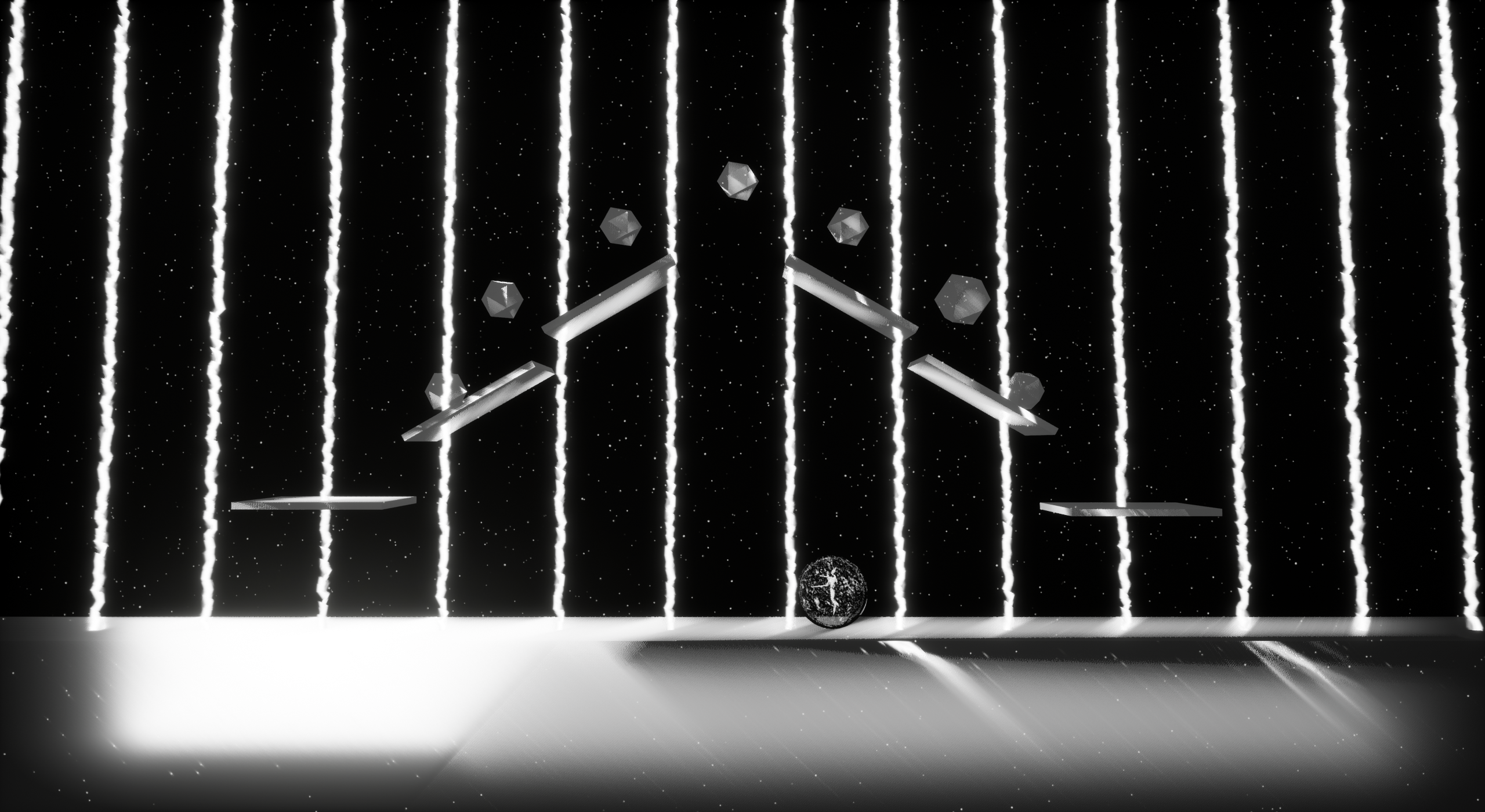
Lost Machines is a linear 2-D platformer set in a post apocalyptic world where humanity has died out, leaving their machine creations to fight for the scraps. In Lost Machines you play as Lilith, a sentient machine that views the departed humans as god and seeks to reach the heart of Eden. A place she believes holds the keep to enlightenment and ascension. Guarding Eden from Lilith is a defense system called Eve. Throughout the game Lilith must face Eve and her army of Angles, as well as the seven corrupted virtues that plague Eden, if she wishes to find and join with her god.
Pre-Production
I started prototyping various platforming systems and ideas in Unreal Engine during the spring of 2020. At first I was considering setting my platformer within a fantasy setting, but ultimately decided to craft a sci-fi experience whose overall semi-abstract aesthetic lent itself more to my abilities as a modeler and rigger, at the time. Once I had decided on a direction, I spent some time creating designs and light documentation of my ideas.
Production
I started work on Talon’s Blade with a team of six others, each with their area of expertise. We were college students at the time, and it was a wonderful challenge to communicate my vision across a team of diverse creatives. One day, I was having a technical programming discussion about the inventory system with my programmers, and the next, I was creating documentation to give to our composer so she could create a leitmotif for our characters. Open communication was very important to ensure things got done well and on time. If I didn’t understand the intricacy of something someone was doing, I’d have them explain it to me so that I could always be sure we were on the same page.
 Yiorgos Bereveskos