Talon’s Blade
Overview
Status:
Released – Q2 2025
Platform – Steam
Roles:
Director
Lead Designer
Producer
Programmer
Artist
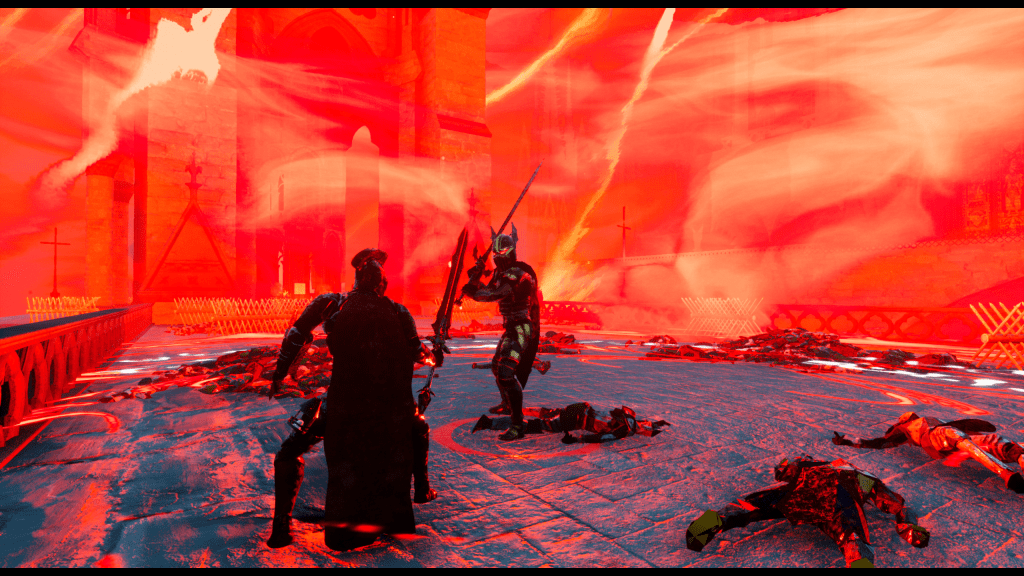
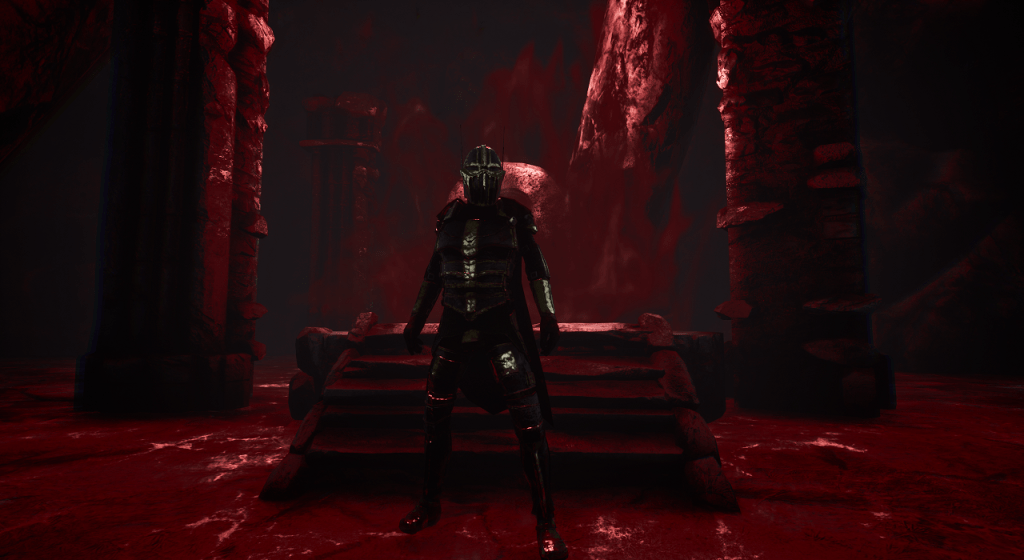
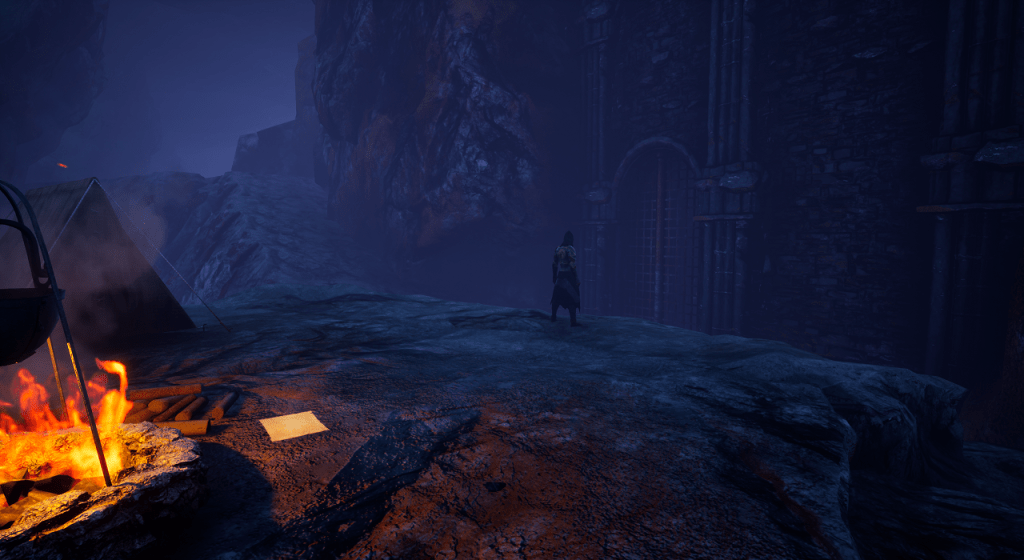
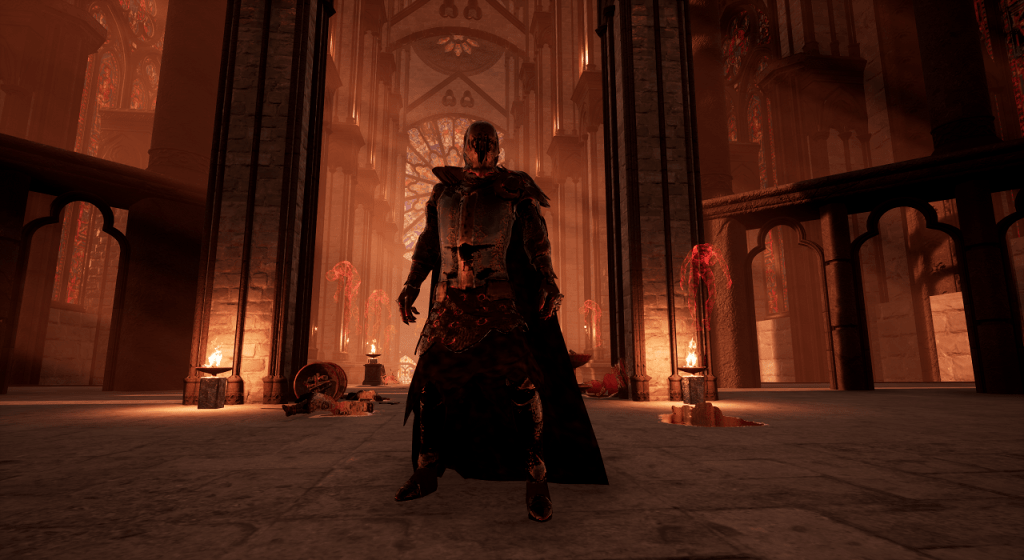
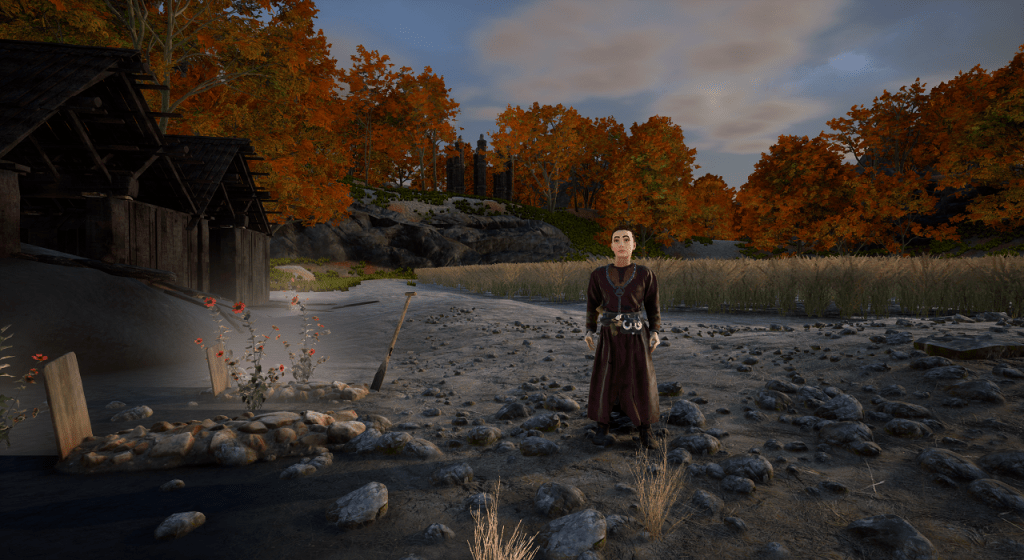
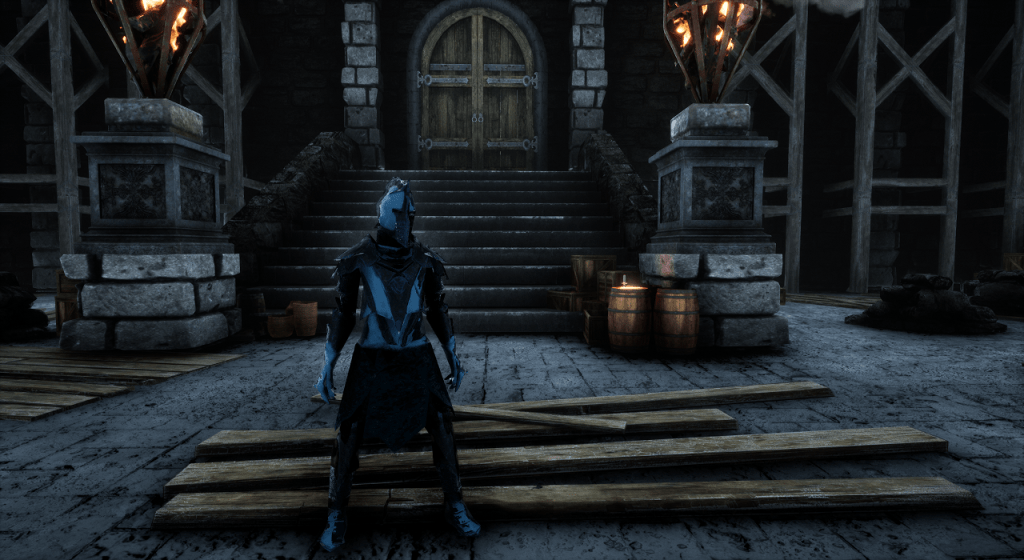
Talon’s Blade is a third-person action-adventure game set in a medieval dark fantasy world stricken by war and betrayal. It features a unique direction-based combat system that uses player inputs to determine the direction of the character’s attacks, blocks, and parries. It is a single-player, narrative-driven experience that follows the last surviving member of a league of Imperial assassins, called the Talons, on his quest for vengeance. Someone close to the Emperor has betrayed the Talons, resulting in their near total annihilation.
Preproduction for Talon’s Blade began during the spring of 2021. I worked as the lead designer and director of Talon’s Blade through its release in May of 2025.
Credits: Robert Reckowsky, Jack Holt, Bryce Hui, Trudy Townsend, Christian Standiford, Hannah Garcia
Gameplay Design
Titles such as For Honor and Kingdom Come: Deliverance inspired the core combat of Talon’s Blade. The starting point for the game design was the direction-based combat system. A system that relies on the directional inputs of the player to determine the direction the character attacks or defends. I knew I wanted the world of Talon’s Blade to be a place of powerful magical forces, so one of the challenges was crafting a magic system that synergized well with the melee combat system. From there, it was a matter of building out the supporting systems, such as the dialog, questing, and progression systems, that would keep the story and gameplay engaging throughout the player’s experience.
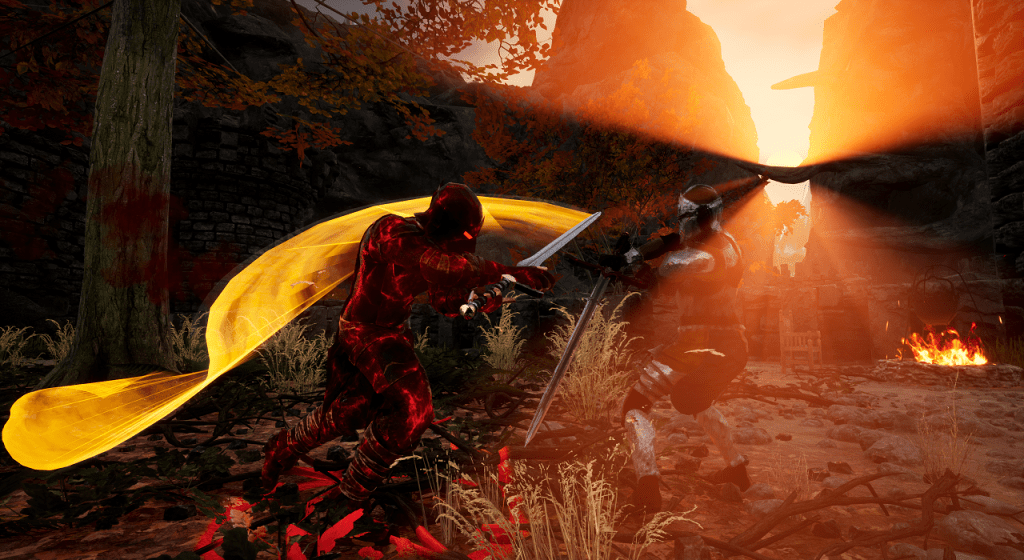

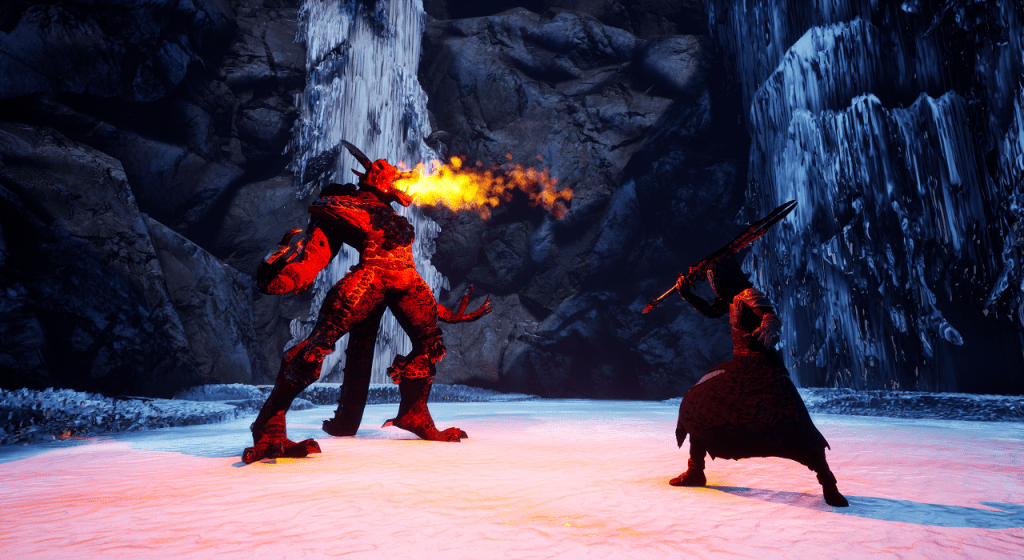
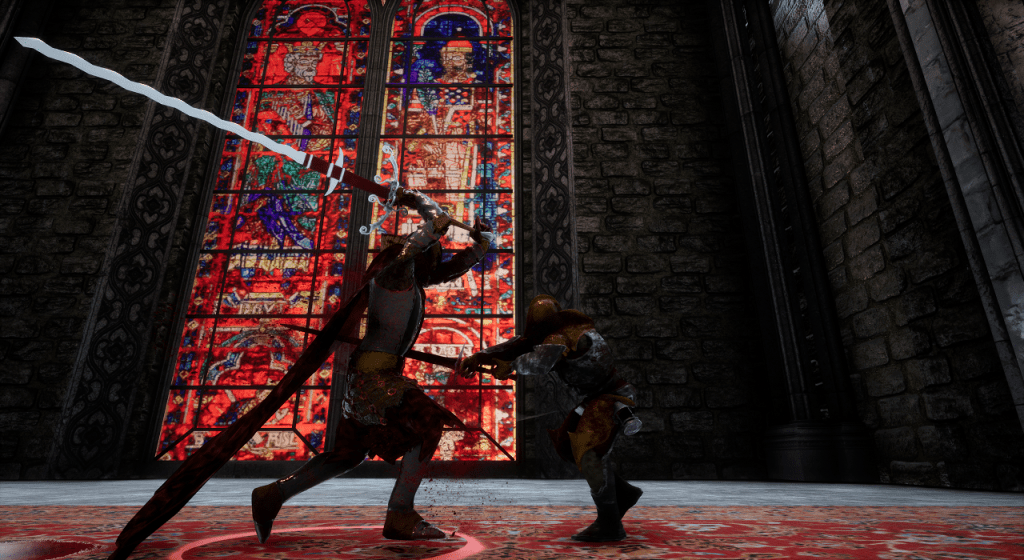
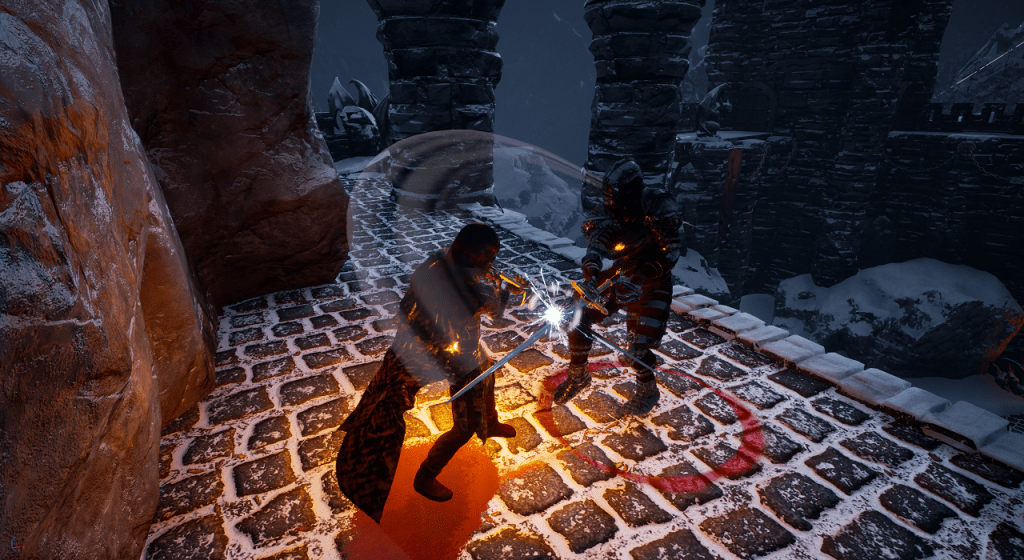
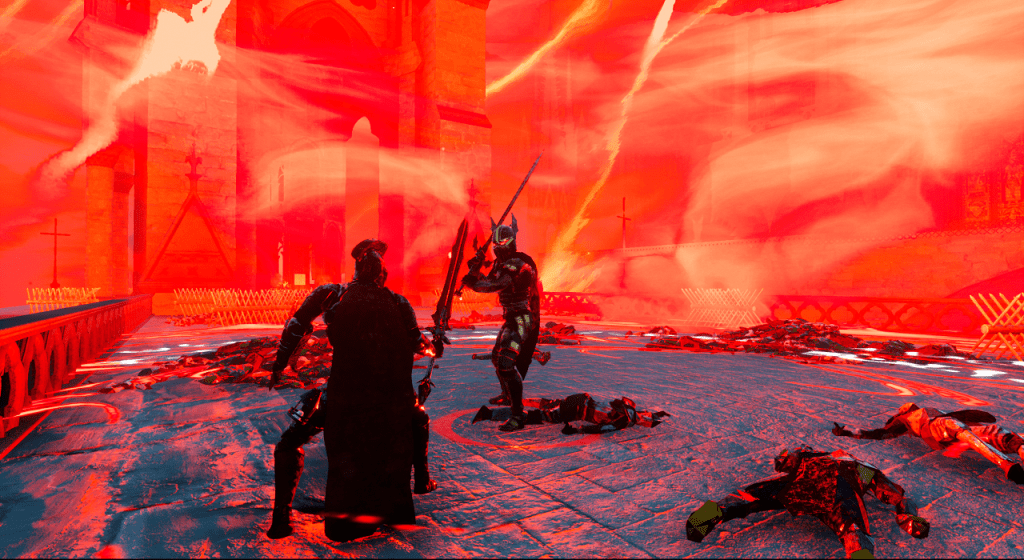
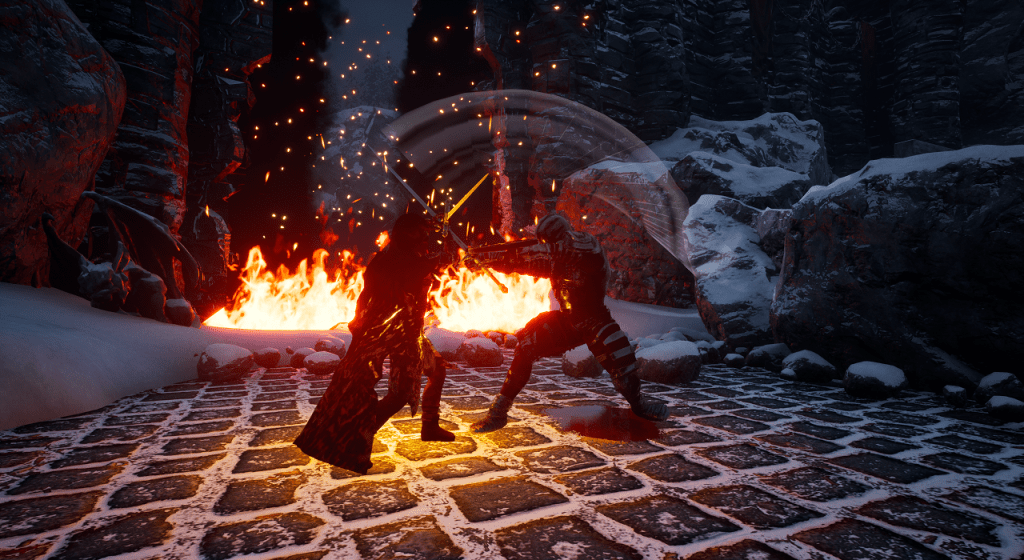
Direction-Based Melee Combat:
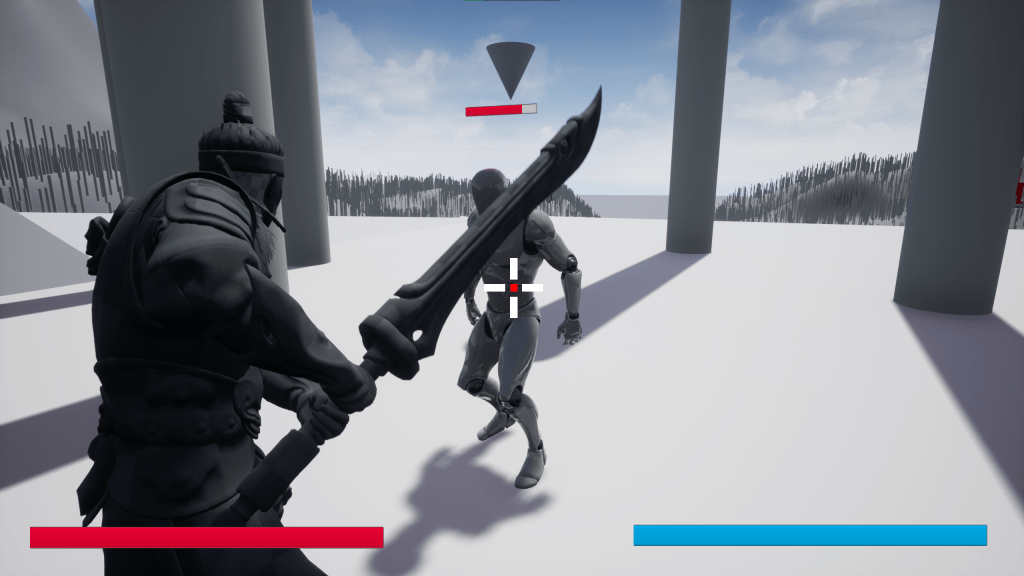
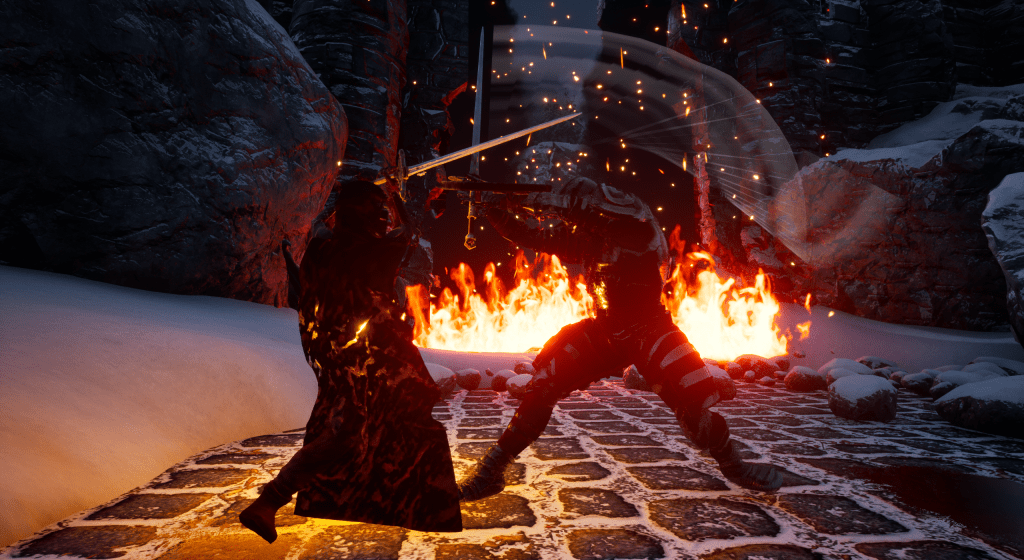
The goal of the Talon’s Blade combat system is to create fluid, immersive, and grounded fight sequences. The idea of direction-based combat greatly inspired me when I designed the combat of Talon’s Blade. Allowing the player to decide the direction of their strikes and blocks provides them with a greater level of control over their character. At the same time, enemies have this new degree of freedom and threat. This additional degree of freedom provided to players and enemies can result in a more immersive and grounded combat experience.
Combat System Details
- I started my process for designing the combat system for Talon’s Blade by exploring games with similar systems to the one I was interested in creating.
- I explored historical swordsmanship and sword-fighting techniques for inspiration. I enjoyed the visceral nature of the Germanic fighting style of Mordhau and decided to use it as the basis for Talon’s Blade‘s combat.
- I settled on four directions for the system: a left and right slash, a downward thrust, and an overhead strike.
- For mouse and keyboard users, I would take the movement of the mouse across the trackpad to input one of these four directions. For the controller, I settled on the right thumbstick.
- Early on, I designed a system where the player would input one of the four directions, initiating a block in that direction, and then press a button to trigger an attack from that blocking stance.
- We eventually decided that it was not necessary to require the player to press a button each time they wanted to attack, and instead changed the system so that holding down a button allowed the player to freely trigger attacks by moving the directional input.
- By tying attack triggers to the directional input itself, the resulting combat feel was much more fluid and responsive. Combining different directions felt much more rewarding and realistic.
- Additional mechanics were layered on top of this base to build out the complete melee combat experience.
- I added a perfect parry system to reward skilled players. Parries are executed by attacking in the same direction as the enemy, moments after they triggered their own attack. Parrying would both block the enemy attack and initiate a player attack in the same motion.
- A feinting ability allowed the player to fake an attack in one direction before cancelling it into another. These feint attacks decreased the likelihood that enemies would block a player’s attack, but increased the overall stamina cost of the attack.
- To make melee combat as engaging and rewarding as possible, all basic melee abilities that I designed for the player I gave to the enemy characters as well.
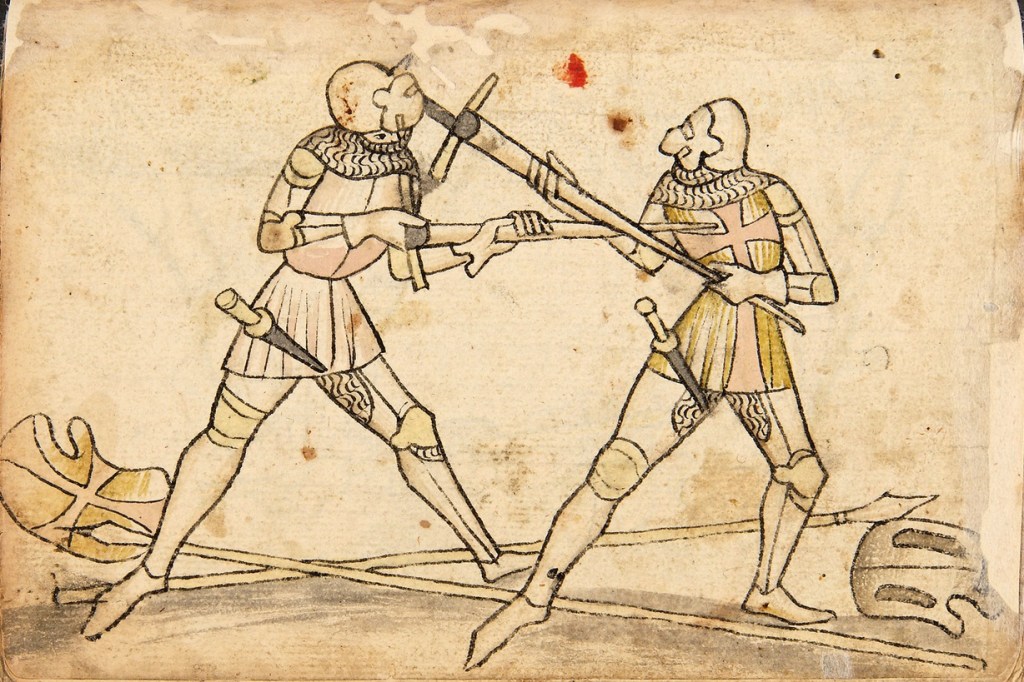
Combo Activated Magic:
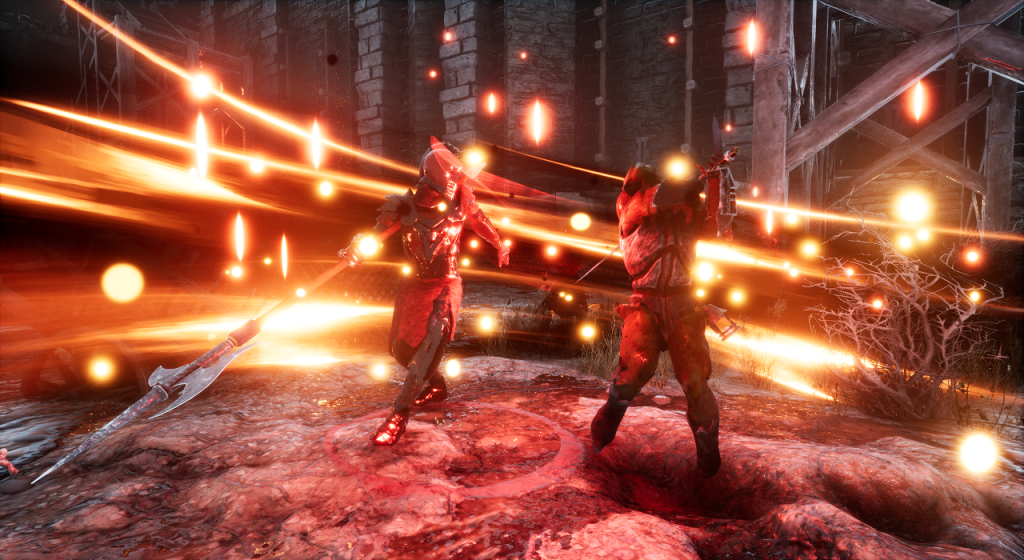
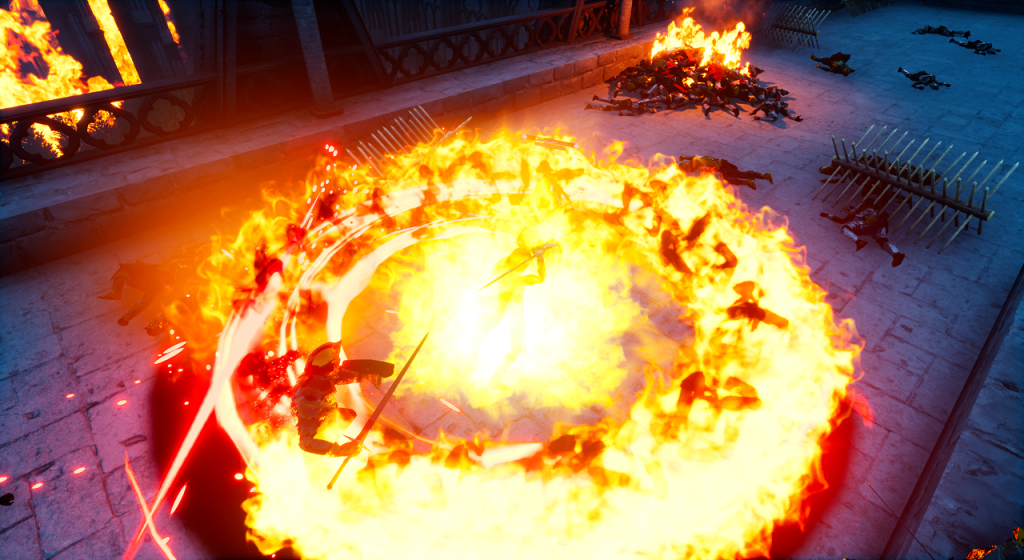
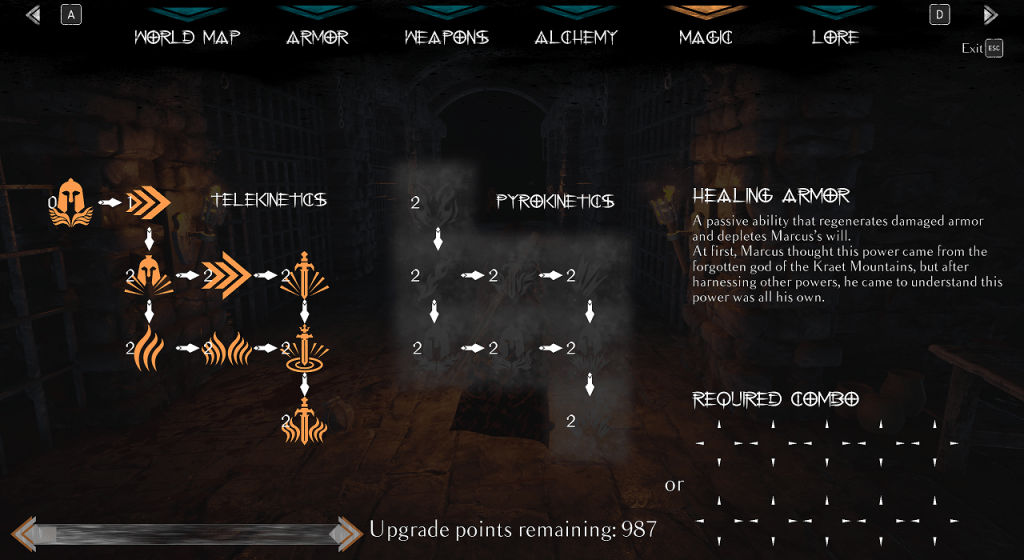
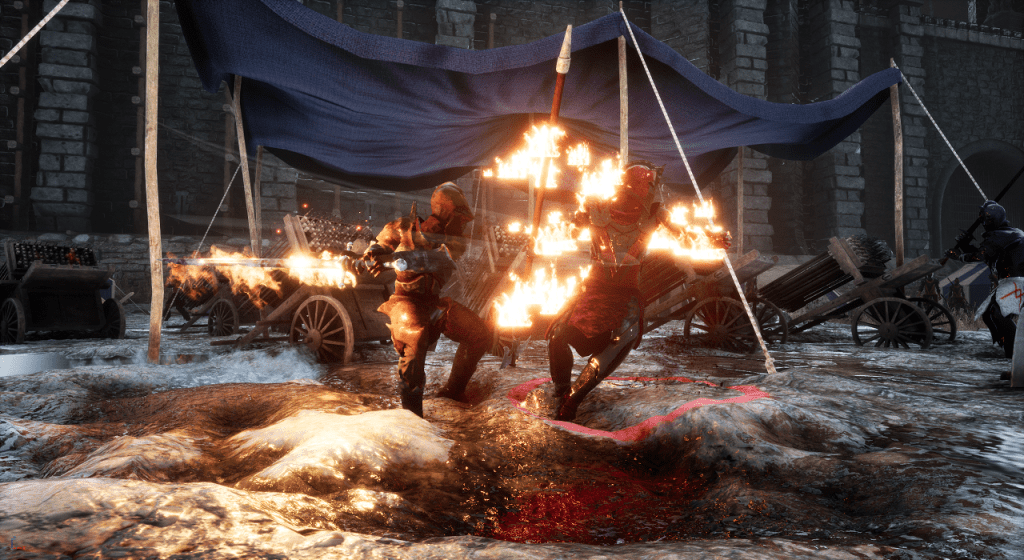
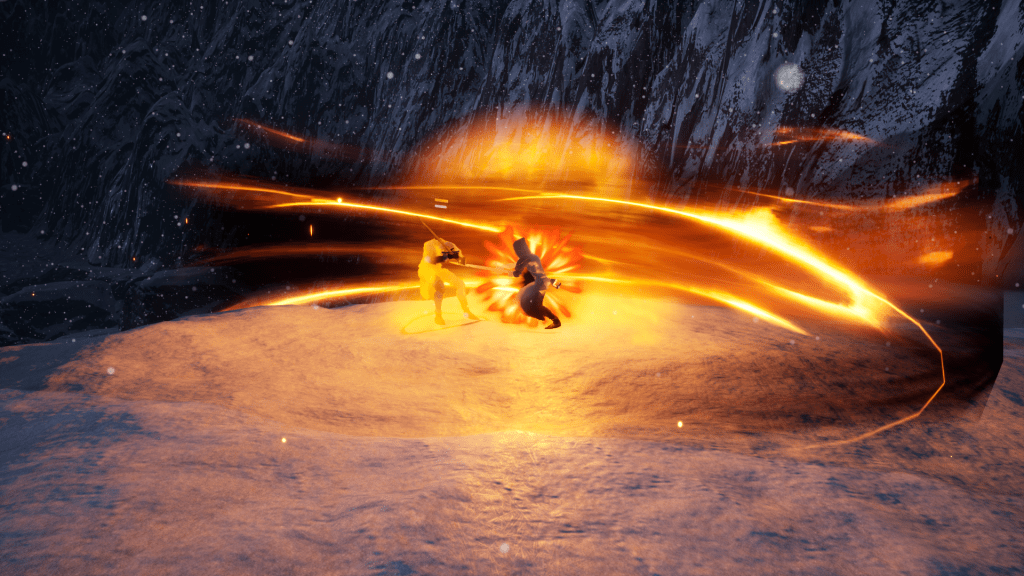
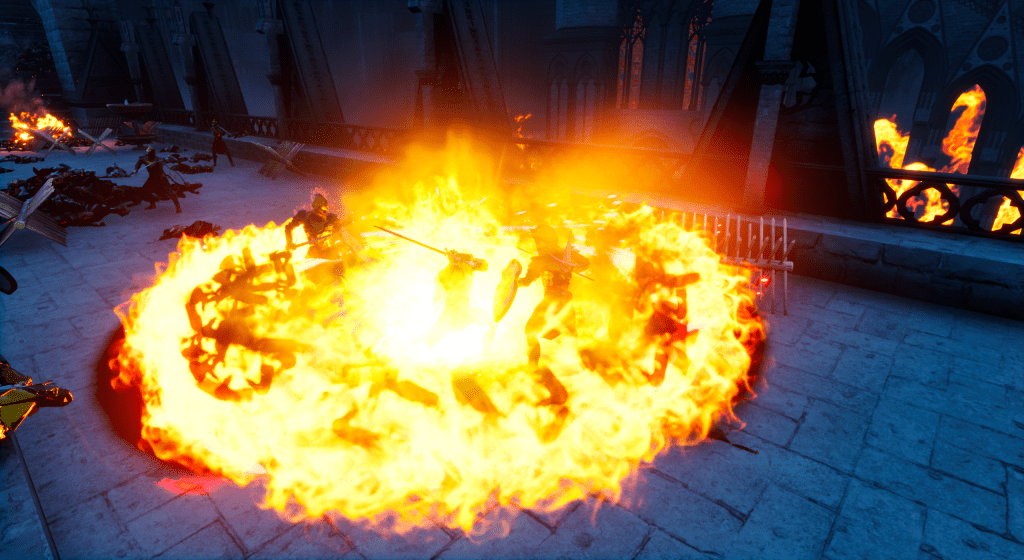
I wanted the world of Talon’s Blade to be a magical one, so I worked on making a magic system to complement the game’s core combat system. I didn’t want the magic to be a separate way of fighting, but rather something that blended with the already existing directional combat to add a new dimension to it. To this end, I based the magic system on player melee combos. As the player increases their combo counter by attacking, they can turn that combo into powerful spells. The higher the combo, the more powerful the spell becomes once cast as a combo finisher.
Magic System Details
- The magic system underwent several iterations before finding its final form.
- To start with, I experimented with a system that featured a scroll wheel, allowing the player to select the spell they wanted to cast and cast it mid-combat whenever they desired.
- This system shifted too much focus away from the melee system, allowing players to deal with enemies without ever entering into melee combat with them.
- Next, I tried a system where magic spells acted as specific combo finishers. After a player completed a unique sequence of attacks, they could trigger the spell that corresponded with that combo.
- While this change put the focus back on the combat system, the cognitive load of remembering which combos corresponded to which spells resulted in a system that just was not fun to use.
- The third time ended up being the charm. We borrowed the best elements from both systems to craft a system that kept the focus on the melee system while still making magic fun and rewarding to use.
- As the player attacked, they would generate a combo. Once they reached a combo length of four or greater, they could cast a spell as a combo finisher. However, the longer the player could make the combo, the more powerful the spell would become once cast.
- Once the player decides to cast a spell and end their combo, a spell selection menu briefly appears to allow the player to select the spell they would like to cast.
- Spells can be unlocked and upgraded using magic points, which are gained by slaying enemies.



Quest & Narrative:
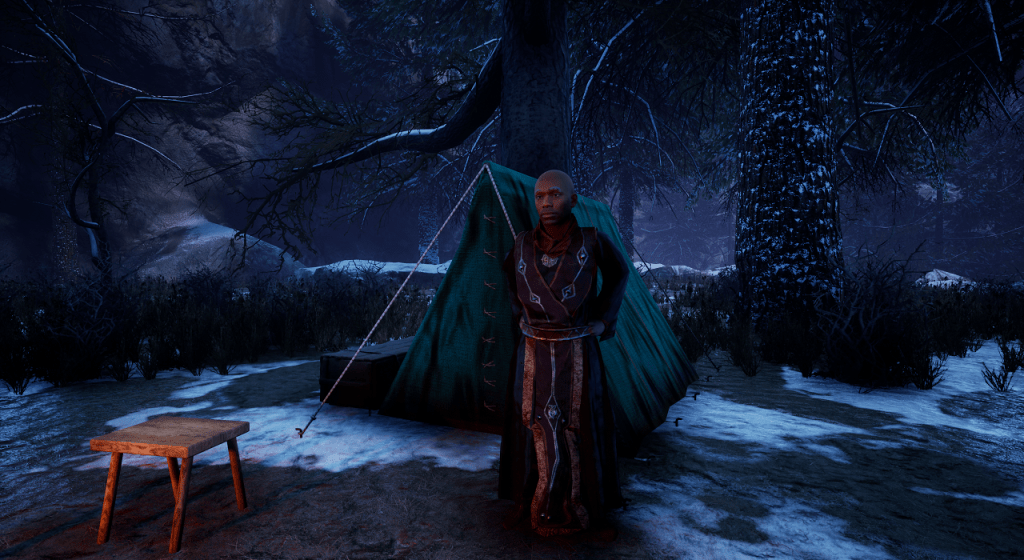
I built the quest and narrative design of Talon’s Blade upon the idea that players progress linearly through a series of non-linear levels. Each level would have an overarching main task that the player could choose to complete at any time, surrounded by smaller side objectives. These optional side objectives are part of the broader narrative of a level and can provide a boon that aids the player in completing the main objective. Completion of specific side objectives, such as character quests and rescue missions, can have an impact on future levels.
Quest & Narrative Details
- To quickly build out multiple side objectives and main level objectives, the quest system I designed assigned each quest step a unique code that would be saved and loaded to determine if a specific quest step had been completed.
- I could rapidly check the saved codes and tell which quests the player had started, completed, and not yet begun.
- I could also use the codes to load or remove world events as players completed quests. Allowing me to create specific quests that took into account player choice to influence how the world reacted.
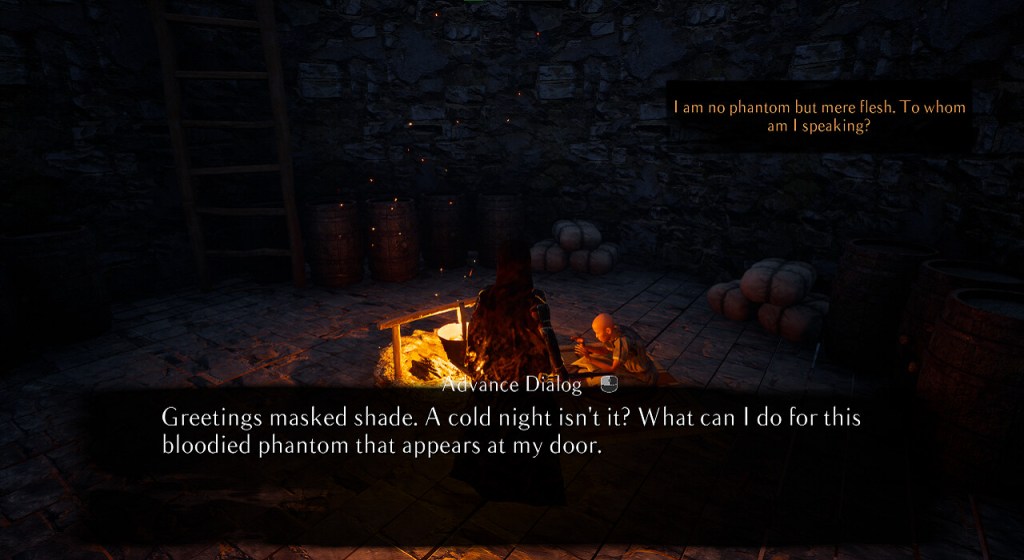
- I also created a branching dialog system that allowed players to select from multiple dialog choices.
- This dialog system used Unreal Engine’s behavior trees to select different dialog options depending on the player’s chosen response.
- I realized that I needed a way to quickly test quest chains without having to play through the entire quest, so I added a debug tool that allowed me to type in a quest code and set it as the active quest code.
- Using this system allowed me to skip steps of a quest to test specific quest interactions, dialog choices, or events quickly.
Equipment:
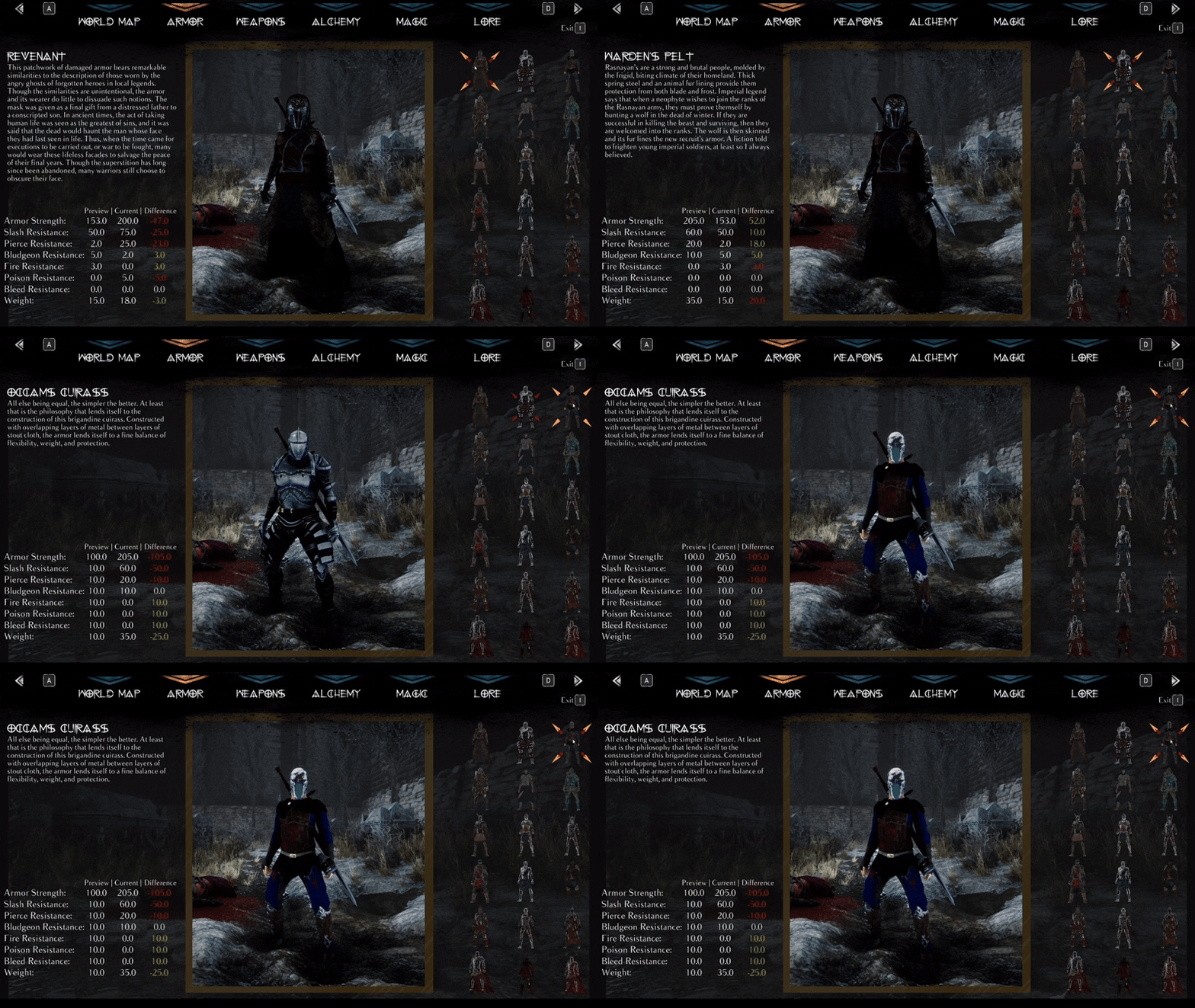
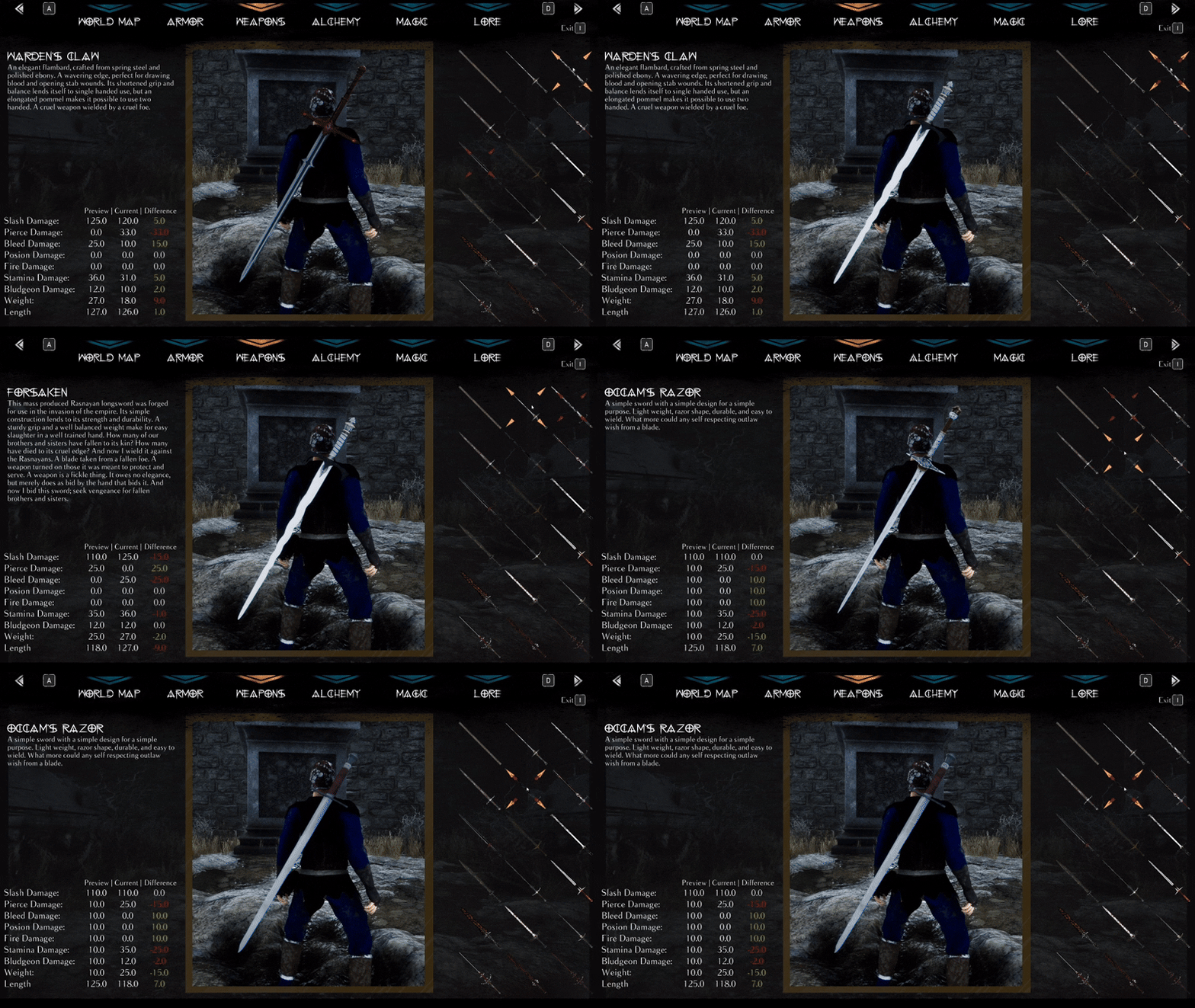
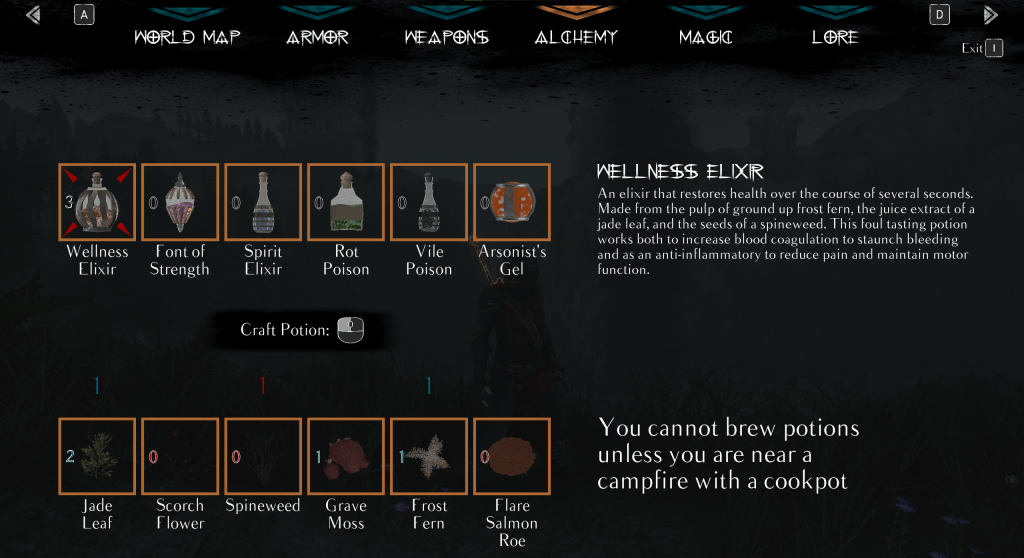
I wanted equipment and resources to serve as direct rewards for completing missions and exploration, and also as a means of player progression. There are eighteen unique weapons and eighteen unique armor sets that the player can discover. As the player progresses through the game, they will uncover new pieces of equipment that are specialized to face some foes or provide statistical trade-offs that can influence play style. In addition to combat equipment, the player can also find alchemical ingredients that are used to brew useful potions to aid in combat and exploration.
Equipment Details
- When development began on Talon’s Blade, I started investigating how I wanted the equipment system to work.
- Initial drafts of the system allowed players to interchange different parts of the weapon and armor to build their own custom equipment.
- Early on, I rejected this idea because of its complexity and low impact on he overall enjoyment of the game.
- I then experimented with the possibility of upgrading the armor and weapons the player would find, but found that this system would require additional supporting resource systems that would take focus away from our core systems.
- I ultimately decided to keep the weapon and armor systems simple, creating more time for critical systems.
- I developed a stat system that allowed for the rapid editing of equipment stats using data tables within Unreal Engine.
- I then built a system where weapon stats add damage effect modifiers to attacks. For example, a weapon with high fire damage has a chance to set enemies on fire, a poison weapon might reduce an enemy’s stamina, and a bleed weapon will deal more damage the higher a player’s combo gets.
- Armor sets have stats that defend against the detrimental effects that enemy weapons could cause.
- All equipment has a weight stat associated with it. The heavier the combined weight of the equipment the player has, the slower their attack and the more stamina actions take.
- I also designed a user interface that allowed the player to see what equipment they had discovered, compare equipment statistics, and equip the desired pieces of equipment.

Level Design

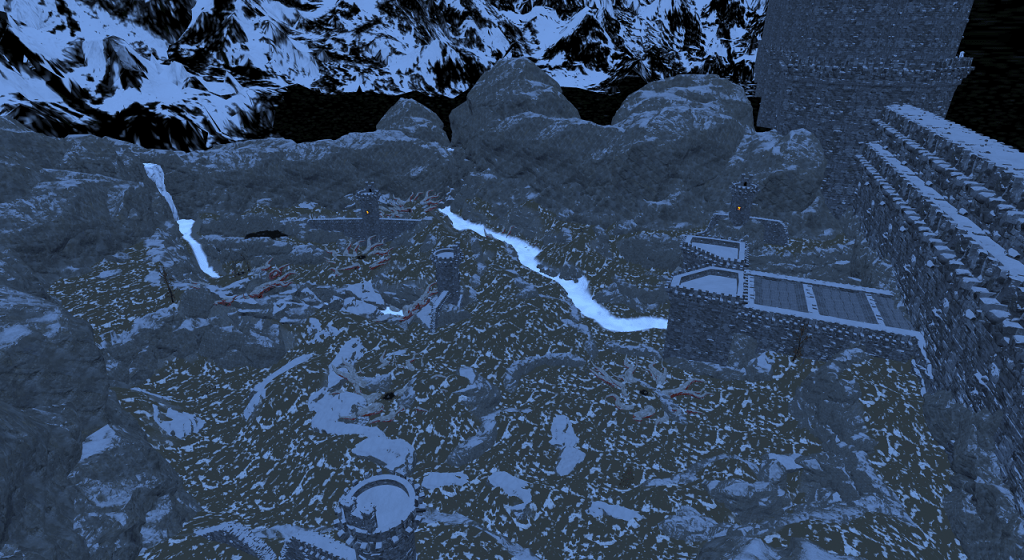
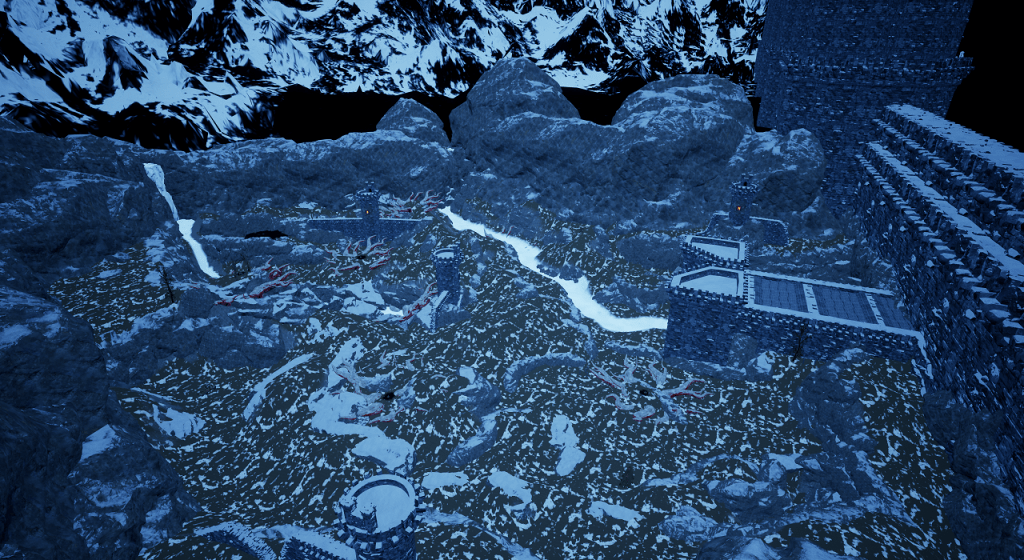
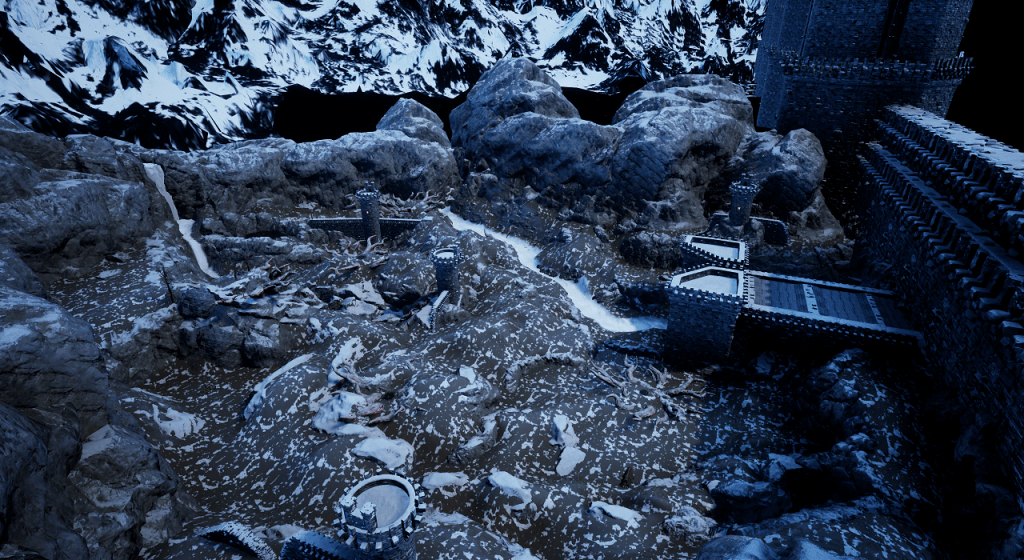
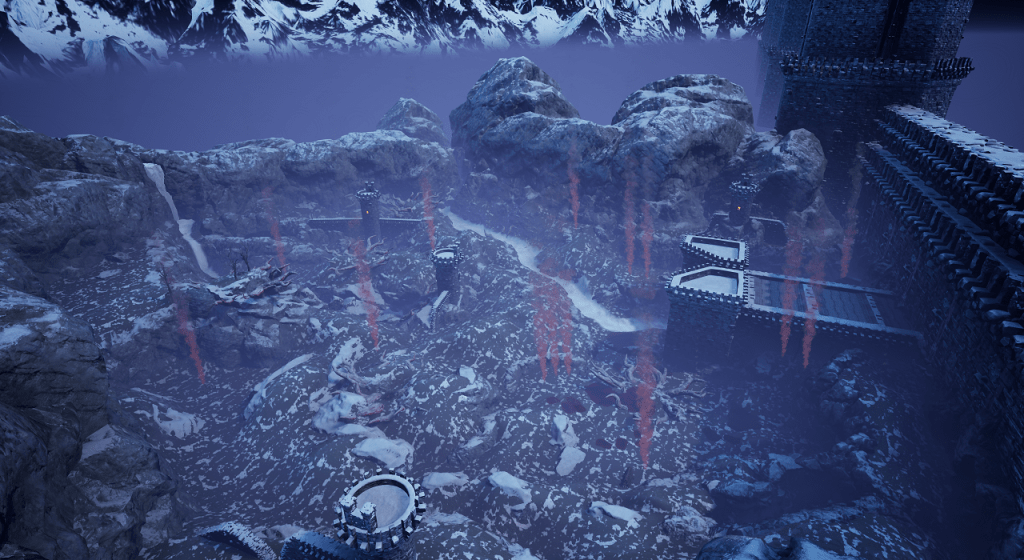
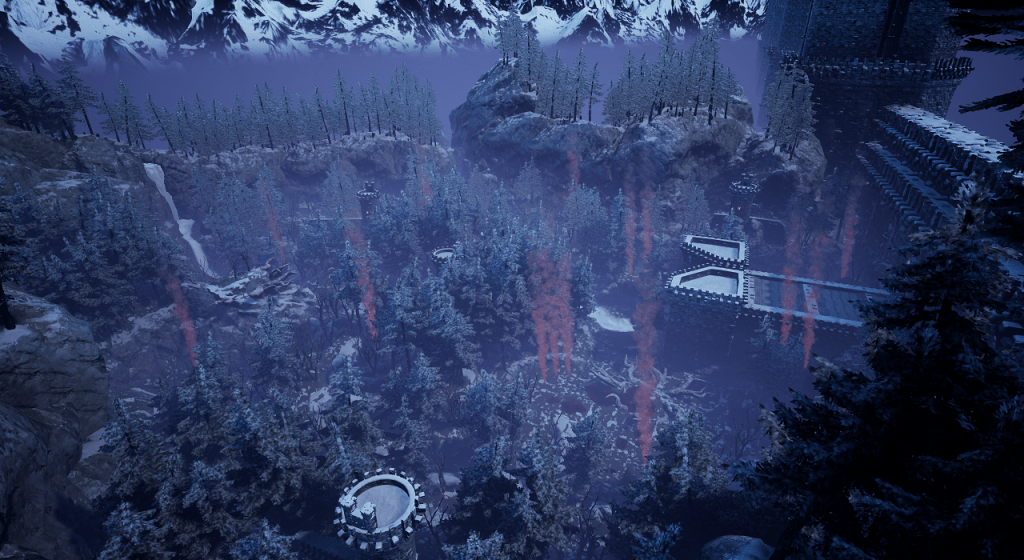
Talon’s Blade has seven levels that the player travels through sequentially. Each level serves a different narrative and gameplay purpose. Some levels have a more linear structure that lends itself to a tighter, more focused experience, both gameplay and narrative. These levels add a sense of urgency and increase the pace of the story. The expansive, semi-open levels allow the player to explore both the world and the gameplay systems. The open levels serve to slow things down. They encourage the player to take their time and prepare before the more intense linear sections.
Paper Design:
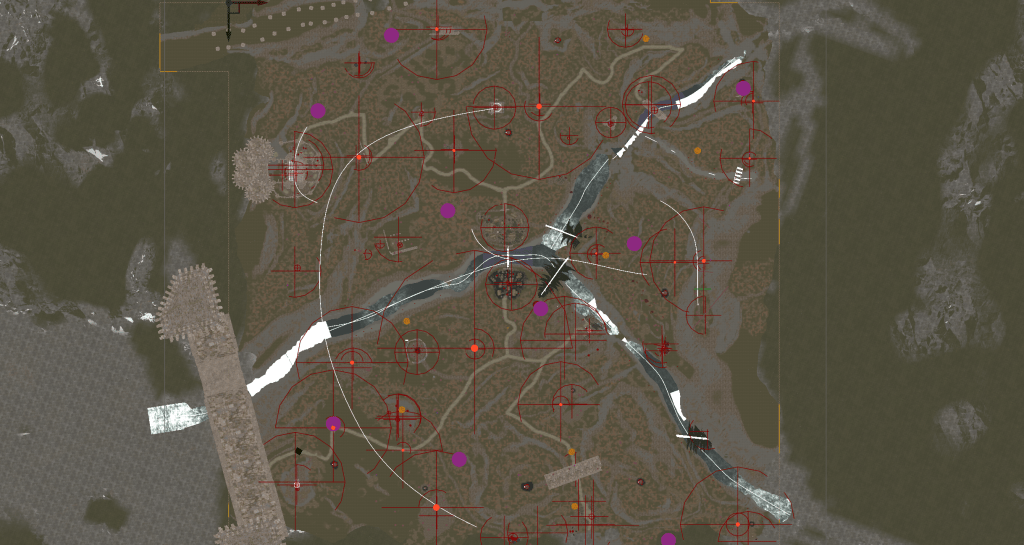
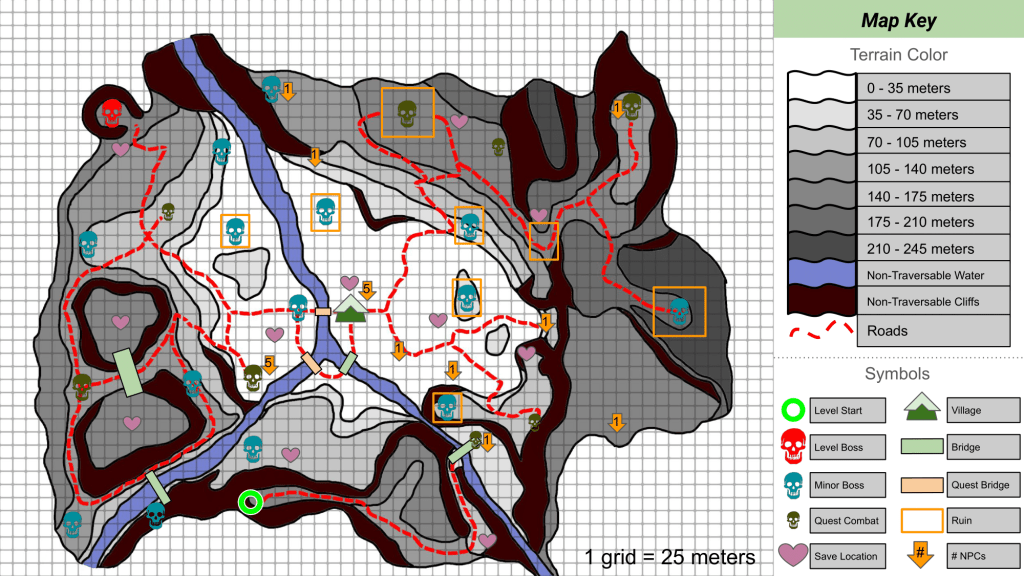
When I began developing Talon’s Blade, I struggled to determine how to display meaningful height information for a continuous landscape, and at the time, my ambition outpaced my ability. With more experience, I would solve the problem of displaying height data on a landscape by utilizing contour lines and color shading to represent both elevation gradients and non-traversable areas. Point of interest symbols provide at-a-glance information on content density and context. Critical paths through the levels are marked out, as well as the start and end points of the level.
30-Seconds of Fun in Open World Design
- When designing the semi-open levels of Talon’s Blade, I developed a 30-second content rule.
- The player should go no more than 30 to 40 seconds, on average, between seeing something that catches their attention and draws them in.
- Playing other successful open-world games informed this design choice, as they often successfully employed a similar content spacing.
- In a paper design, this can be determined by knowing the player character’s speed and calculating the distance they could travel in 30 seconds, then placing points of interest accordingly.
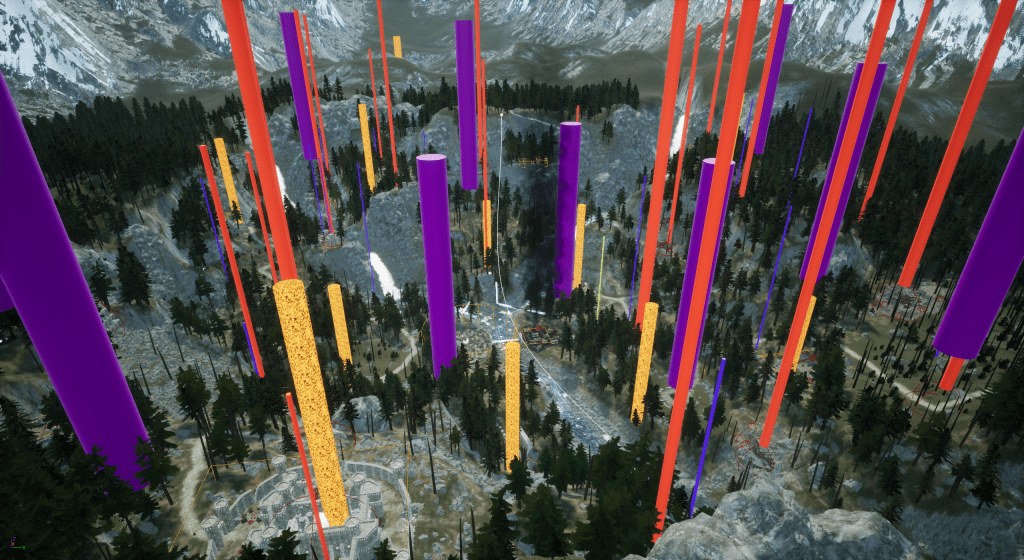
- For Talon’s Blade, I learned about this after I had already done the art pass, so I manually ran around the level, placing color-coded cylinders every 30 seconds to ensure I had a proper content distribution.
- Using this 30-second rule is something I would now do during the paper design phase to save myself and others unnecessary work down the road.
White Boxing:
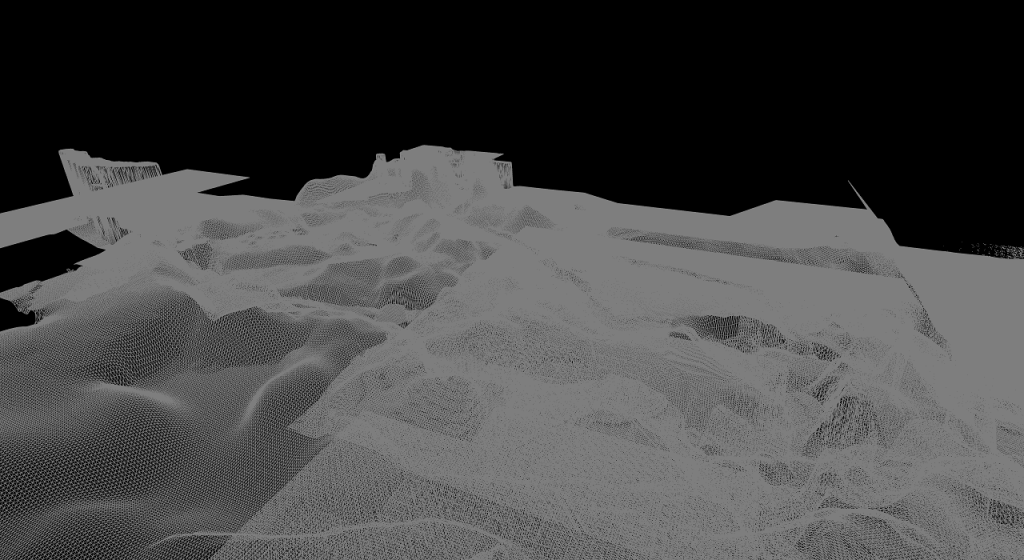
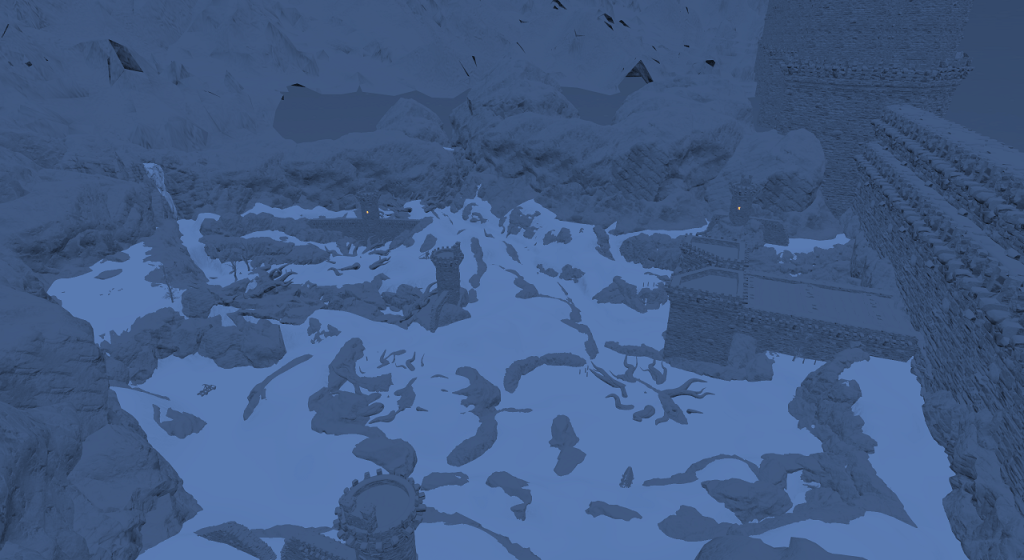
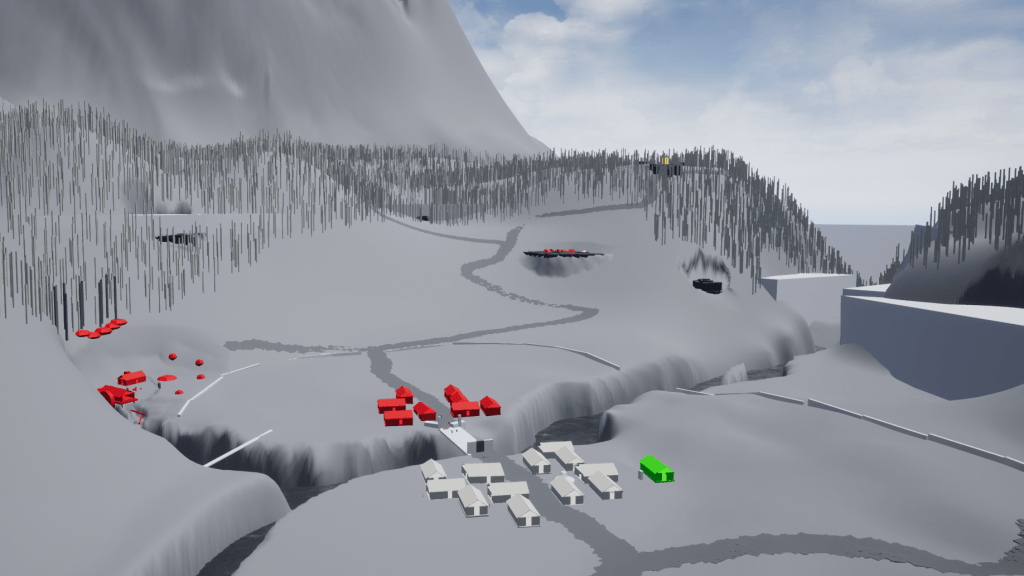
White boxing is a critical step and serves as the bones of my level design process. Laying out an environment in 3D space without any art assets allowed me to take in the space and dimension of an environment before committing to it by adding art and scripting. The iterative process of white boxing and paper design was crucial to the development of Talon’s Blade. During the creation of the fifth level, after exploring the level’s white box, I found that the flow and progression of the level were better if the player entered a dungeon after going through an open space rather than before.
Scripting:
Once the bones of a space are in place, I can go through and start adding the scripting. At this stage, the system functionality of the level is fleshed out. Quests and critical systems, such as doors or elevators, are added. I also work on enemy placement and encounter building during this step. Tweaking spaces and asset positions to work with each other to build out encounters and points of interest. I’ll also add any puzzles or environmental interactions during this step, such as kill barriers, save points, or NPCs.

Art Pass:
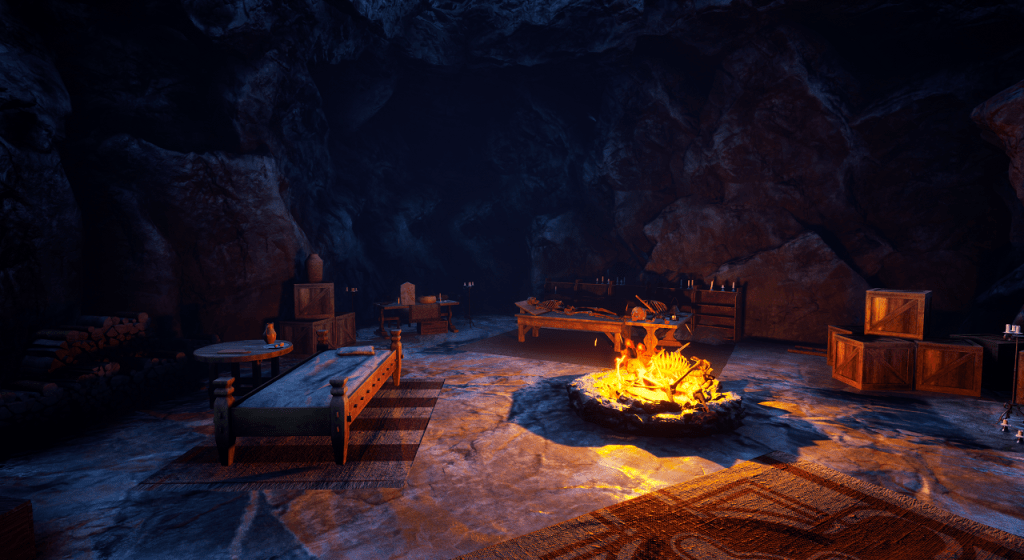
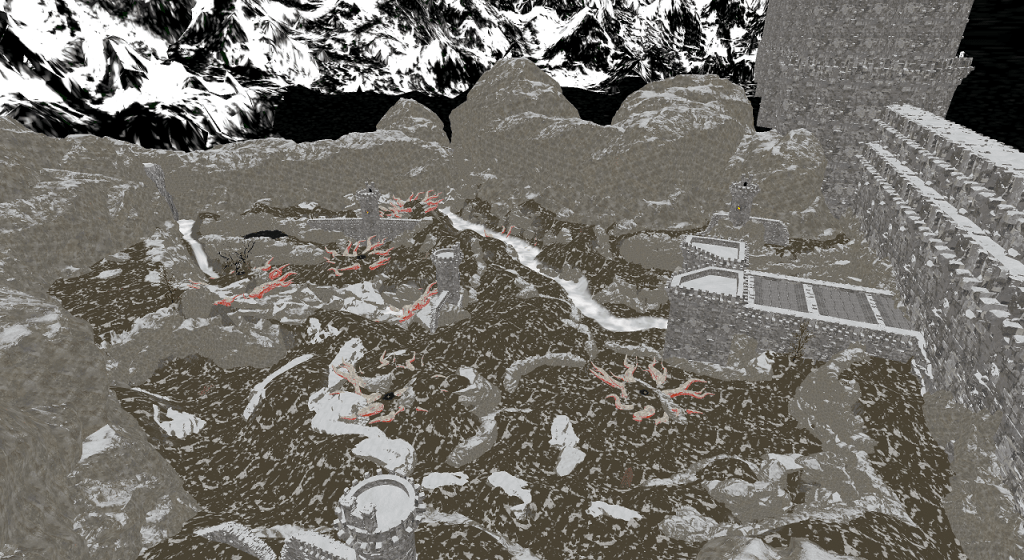
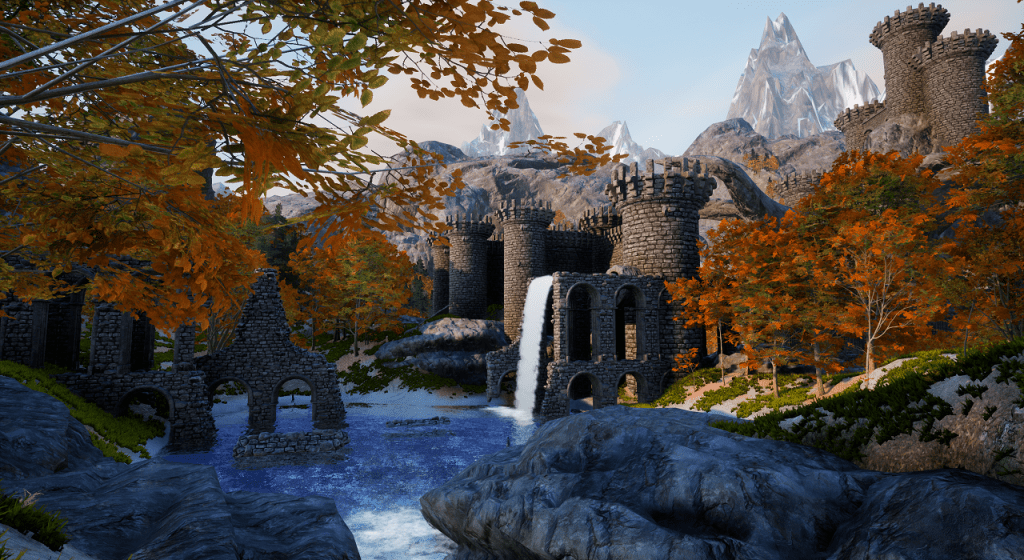
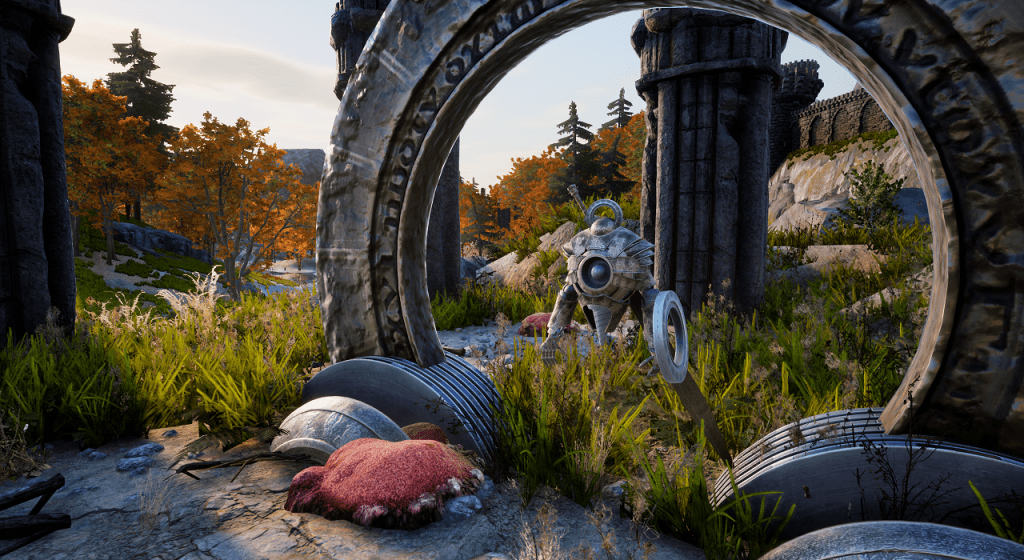
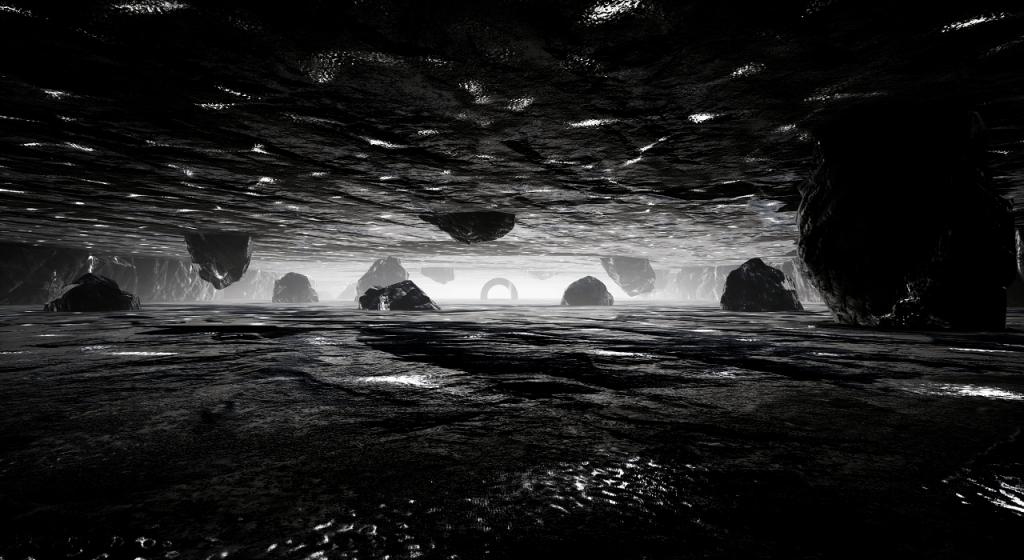
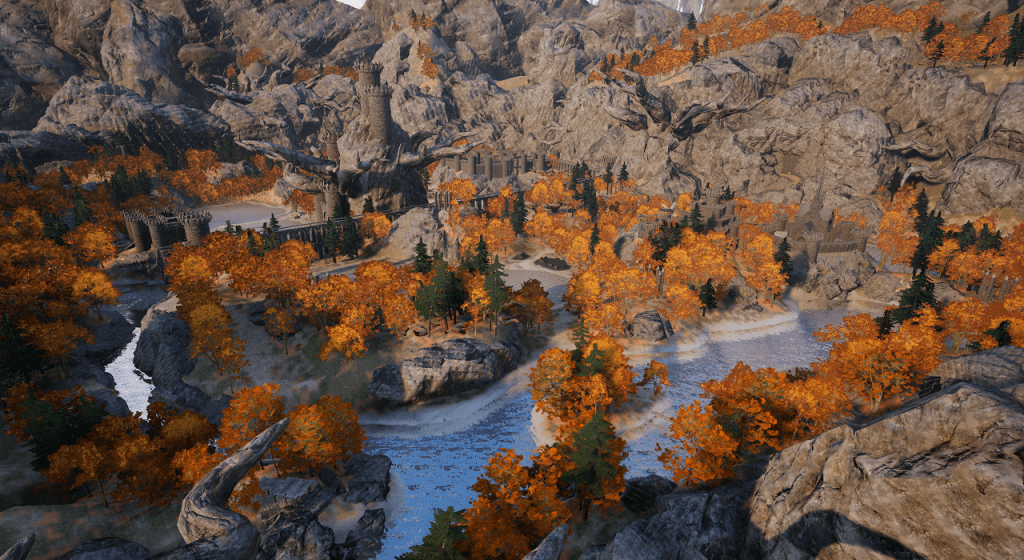
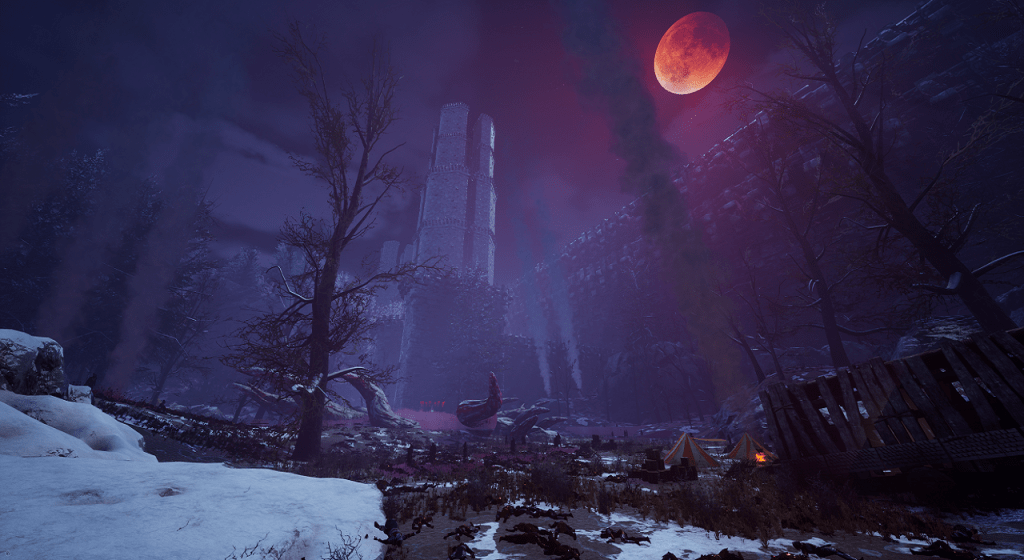
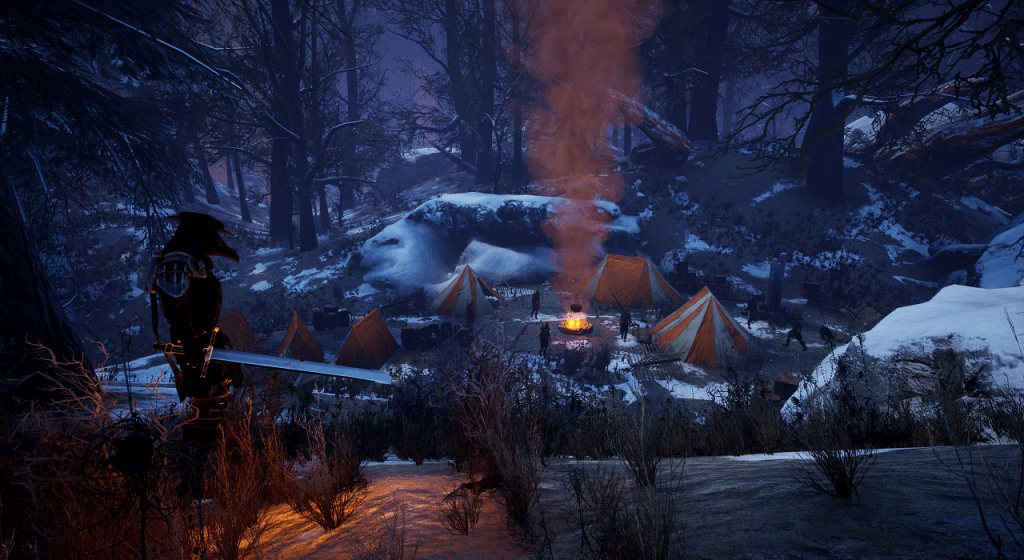
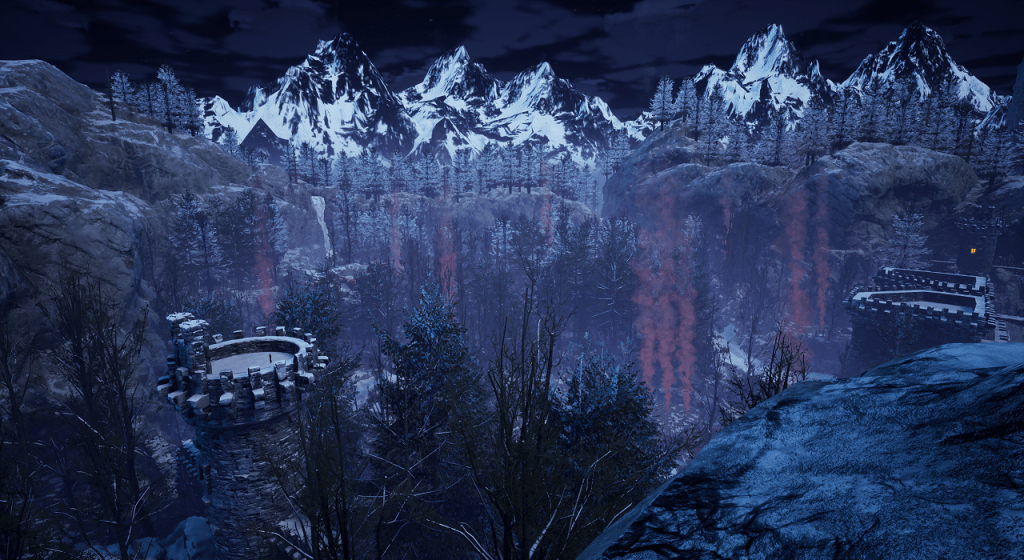
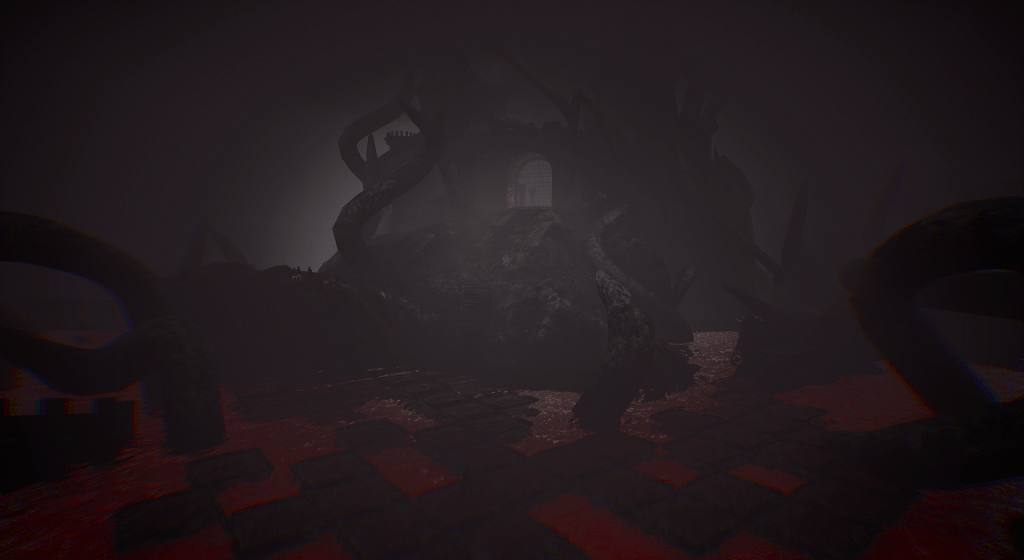
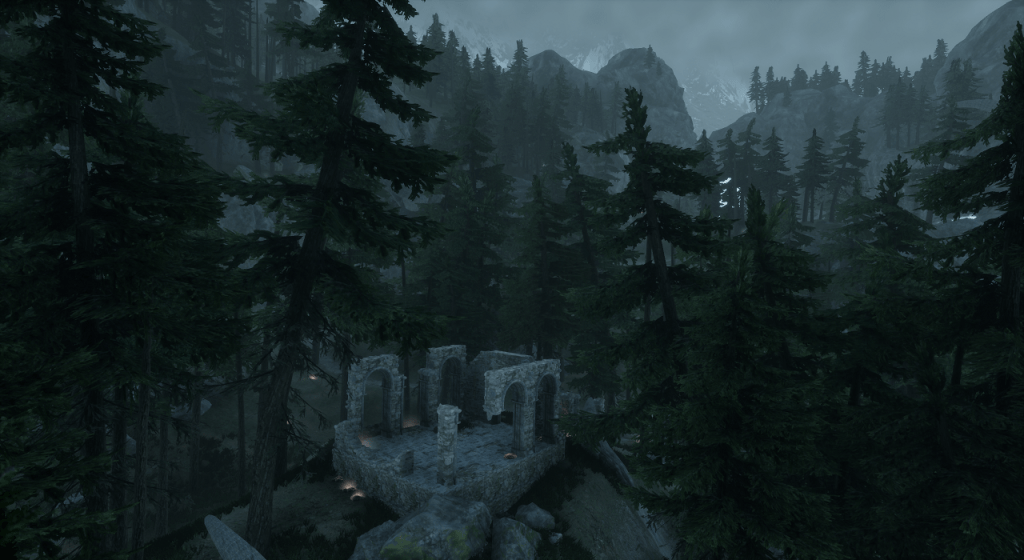
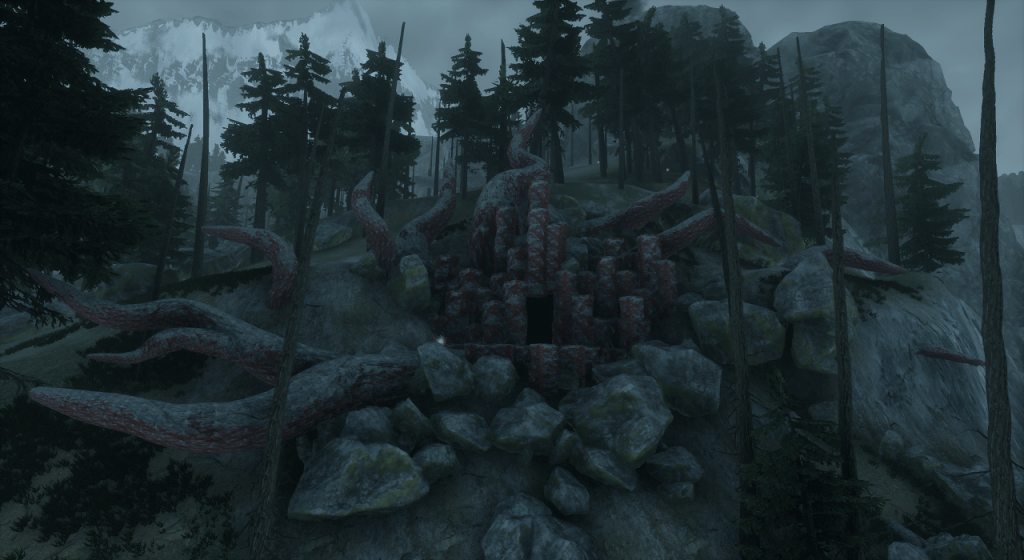
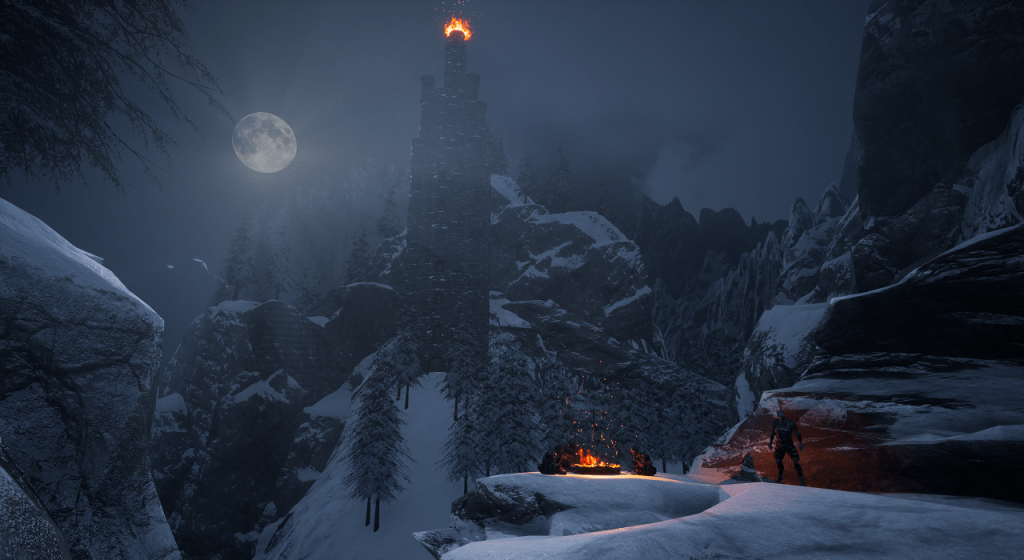
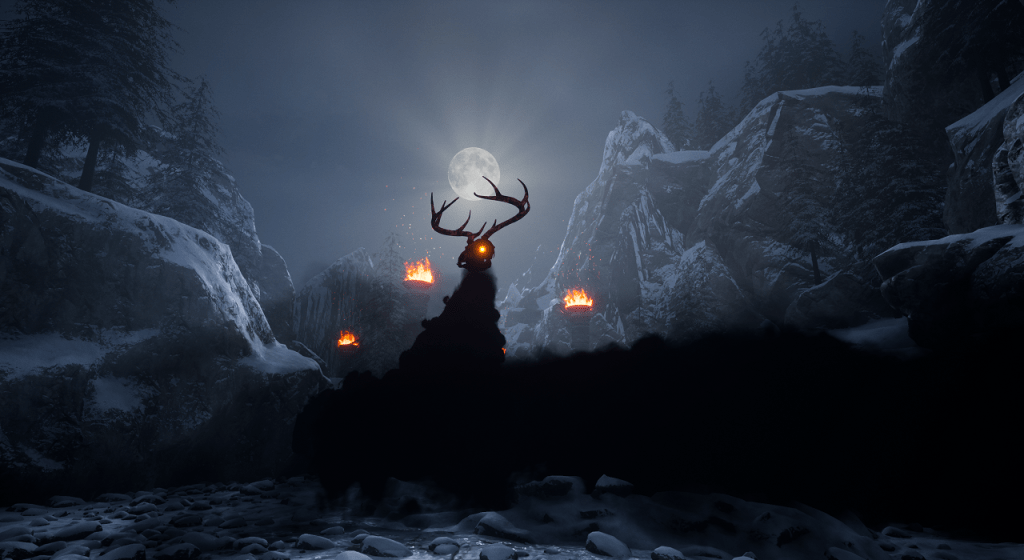
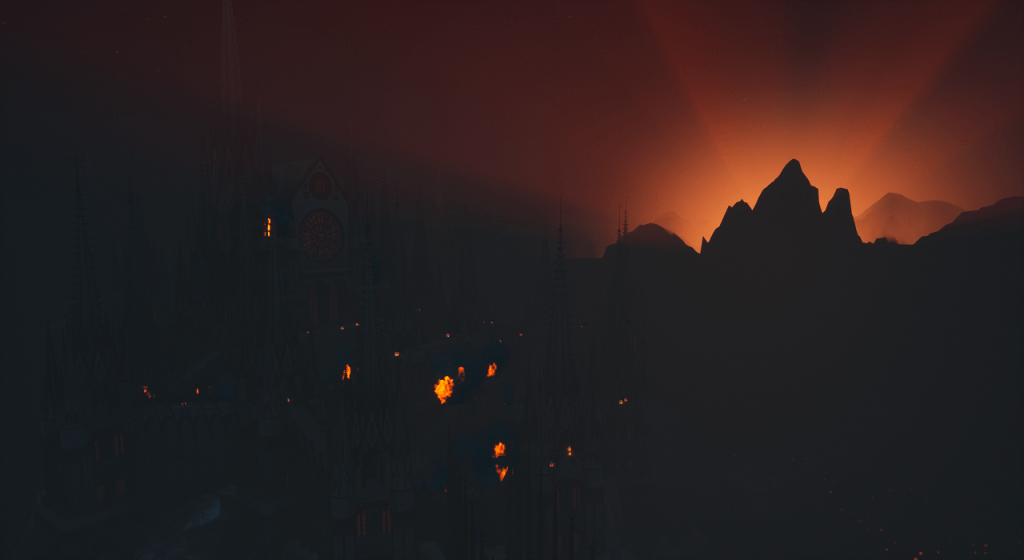
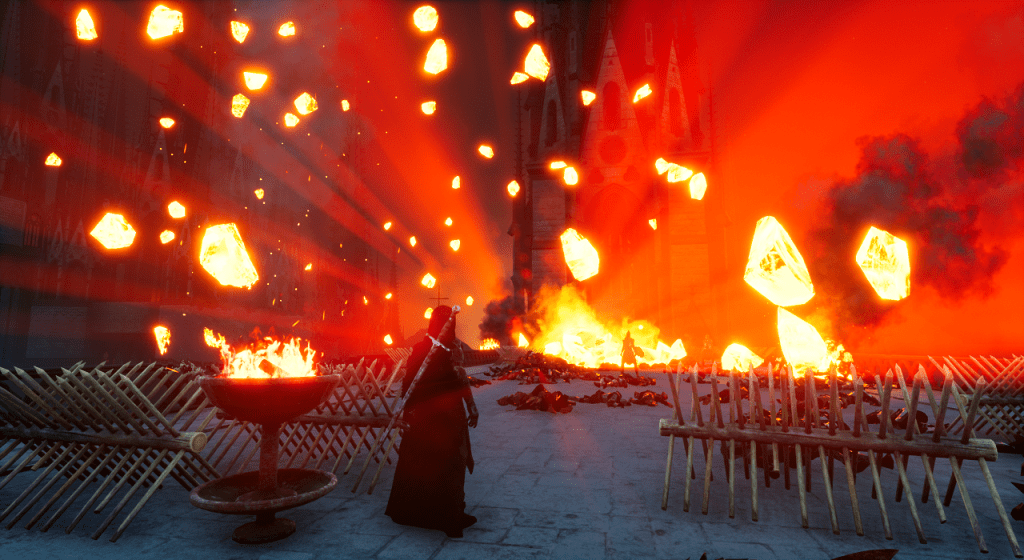
After the bones and flesh of a level are in place, I work on adding the skin. This process involved placing art assets to correspond with the white box and maintain the design decision made in earlier stages. To me, art passes are an iterative process. I will build out the art of a level in stages. I allow each stage to influence the other stages. Once I have a level looking the way I want it to look, I’ll make sure to optimize it for my target platform and 60 frames per second.
 Yiorgos Bereveskos